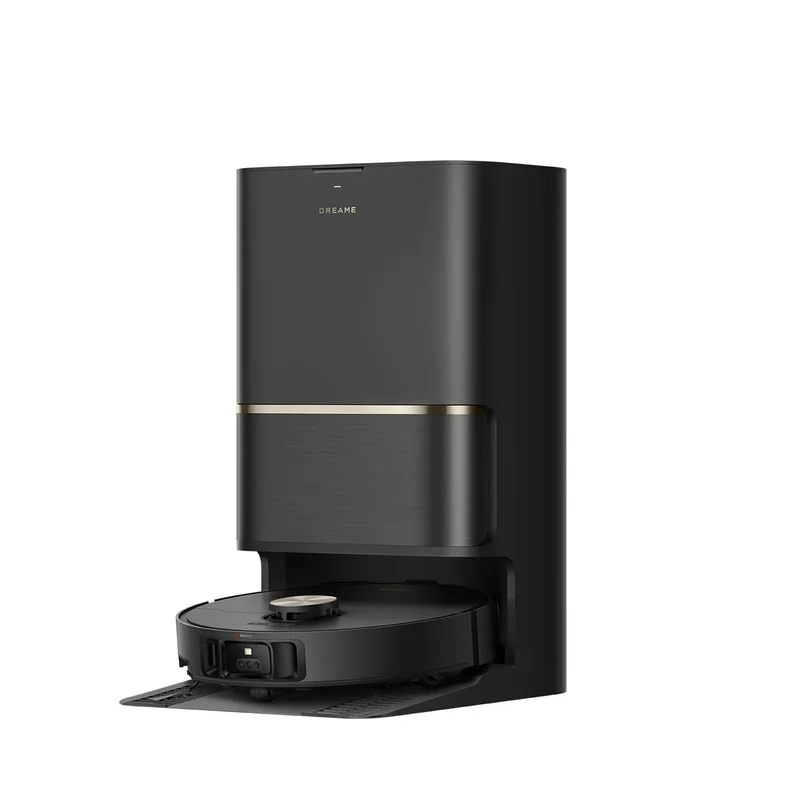
Both robots run dual spinning mop pads, LiDAR plus camera navigation, and self-emptying docks, so the real split comes down to hardware details. The Dreame L50 Ultra adds a dual rubber-and-bristle brush with anti-tangle protection, a larger dustbin, mop pad air drying, and the ability to lift itself over 60 mm obstacles. The Mova P50 Pro Ultra keeps the core automation intact for a lot less money, which makes it the sensible pick for smaller homes without pets.
Here's a matchup where the spec sheets look almost identical until you start reading closely. Same mop type (dual spinning pads), same navigation stack (LiDAR, camera, AI, 3D structured light), same self-emptying dock, and suction ratings within 500 Pa of each other. Yet one costs nearly half of what the other does. That price gap buys you a different brush design, tangle protection, mop pad drying, and a much taller obstacle-clearing ability. Whether those extras justify the jump depends entirely on what's on your floors and how much hair lives in your house.
Dreame L50 Ultra
out of 10Mova P50 Pro Ultra
The Dreame L50 Ultra takes a clear lead here with an 8.4 overall rating against the Mova P50 Pro Ultra's 7.2. The biggest gap is in cleaning, 8.4 to 7.0, meaning the Dreame pulls more dirt out of carpets and handles messes with less fuss. Features follow the same pattern at 8.8 versus 7.5, so you get more automation and smarter extras. Navigation is closer, 8.2 to 7.6, with both moving through rooms competently. The Dreame also delivers better value for what you pay.
Brush design sets the tone. The L50 Ultra runs a dual brush combining rubber and bristle, plus anti-tangle hardware that cuts and clears wrapped hair, and the Mova uses a single rubber brush with no tangle protection. Then there's the dock: the Dreame air dries its mop pads after washing, which keeps them from sitting damp and smelling sour between runs, and it holds a bit more clean and dirty water. Obstacle clearance is another real gap, 60 mm versus 22 mm, so the Dreame handles thick rugs and taller thresholds the Mova has to route around. The Dreame also carries a bigger battery (6,400 mAh versus 5,200 mAh) and a roomier dustbin at 395 mL against 300 mL.
Suction sits close (19,500 Pa versus 19,000 Pa), so the difference comes from the brush: the L50 Ultra's dual rubber-and-bristle roller agitates carpet fibers more aggressively than the Mova's single rubber brush. The Dreame's 395 mL dustbin also outlasts the Mova's 300 mL between dock trips.
Both use dual spinning mop pads, the strongest widely available mopping system, which press down and actively scrub rather than just dragging. The L50 Ultra pulls ahead on upkeep with auto air drying for its pads, and it carries an 80 mL onboard water tank for refills mid-run.
Anti-tangle is the deciding feature here, and only the L50 Ultra has it. If you live with a shedding dog or long-haired household, that hardware saves you from cutting hair off the brush roll every week.
Both robots use the same sensing combination of AI, camera, 3D structured light, and LED illumination on top of LiDAR mapping, so they read a room similarly. The L50 Ultra's 60 mm obstacle clearance versus 22 mm means it climbs over thresholds and thick rug edges the Mova avoids.
Both docks empty the dustbin and wash the mop pads automatically. The L50 Ultra adds air drying after each wash and holds slightly more clean and dirty water, though the Mova's dock takes up more floor depth at 18 inches against 13.4 inches.
The Mova edges out a longer stated run time at 210 minutes versus 200, but the Dreame's larger 6,400 mAh cell (against 5,200 mAh) supports higher suction for longer and covers up to 2,002 sq ft in a single run.
It's a wash here. Both offer built-in voice control plus Alexa, Google, and Siri support, along with no-go zones, multi-level maps, smart carpet cleaning, and obstacle avoidance.
| Feature | Dreame L50 Ultra | Mova P50 Pro Ultra |
|---|---|---|
| Anti-Tangle | Yes | No |
| Main Brush Type | Dual (rubber & bristle) | Single (rubber) |
| Auto Air Drying | Yes | No |
| Battery Life | 6,400 mAh | 5,200 mAh |
| Obstacle Clearance Height | 60 mm | 22 mm |
| Smart Obstacle Avoidance Technology | AI + camera + 3D structured light + LED | AI + camera + 3D structured light + LED |
We may earn a commission if you make a purchase
The L50 Ultra is the more complete machine, and pet owners or anyone with thick rugs will feel the difference every week. But the P50 Pro Ultra covers the fundamentals well: dual spinning mops, LiDAR mapping, and a self-emptying dock at a much friendlier price. Match the robot to your floors.