Head-to-head comparisons with expert analysis, spec breakdowns, and live pricing from multiple retailers.
 vs

Dreame D30 Ultra CE vs Mova P10 Pro Ultra
Suction is the Dreame D30 Ultra CE's calling card at 25,000 Pa, nearly double what the Mova P10 Pro Ultra pulls, and it runs longer per charge. But the Mova counters with far smarter navigation, a hotter mop wash, auto detergent dispensing, and extendable brush and mop arms for edges, all at a lower price. Pick the Dreame for deep carpet pickup and long single-run coverage; pick the Mova for cluttered, furniture-heavy homes where getting around obstacles matters more than peak suction.
 vs

Dreame L40 Ultra Gen2 vs Mova P20 Ultra
Navigation is the deciding factor here. The Dreame L40 Ultra Gen2 sees what's in front of it using an RGB camera, 3D structured light, AI, and an LED lamp, so it steers around socks, cords, and pet bowls instead of pushing them across the room. The Mova P20 Ultra counters with stronger 30,000 Pa suction, a tangle-resistant brush, and hot-water mop washing, which makes it the pick for long-haired pets and homes where floors matter more than clutter.
 vs
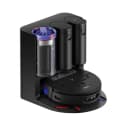
Dreame Matrix10 Ultra vs Dyson Spot+Scrub Ai
Dreame's Matrix10 Ultra covers more ground on almost every front: nearly double the suction, a dual-brush roller setup, an extendable side brush, and a dock with far bigger water tanks. The Dyson counters with a roller mop, the most effective mopping design currently available, plus a 200-minute run time and a larger onboard water tank. Households that want deep vacuuming and a dock that runs for weeks between refills should take the Dreame; floor-mopping purists on a tighter budget will appreciate what the Dyson does with its roller.
 vs
Ecovacs DEEBOT X9 Pro Omni vs Mova P20 Ultra
Navigation is the dividing line here. The DEEBOT X9 Pro Omni pairs LiDAR with a camera, a light, and 3D structured light AI obstacle avoidance, plus a roller mop and automatic detergent dosing, which suits cluttered homes with pets, cords, and toys on the floor. The Mova P20 Ultra counters with 30,000 Pa of suction, dual spinning mop pads pressing down at 12 N, and bigger dock tanks, making it the pick for someone who wants scrubbing muscle and longer stretches between refills.
 vs

eufy X10 Pro Omni vs Roborock Qrevo S Pro
Suction is where the Qrevo S Pro pulls ahead, with 18,500 Pa against 8,000 Pa, plus a hotter mop wash at 167 °F and bigger dock tanks. The X10 Pro Omni counters with an RGB camera and LED light for obstacle spotting, mapping across up to 5 floors, and slightly higher mop pressure. Go with the eufy if dodging cords, socks, and pet toys matters most; go with the Roborock if deep carpet pickup and a lower-maintenance dock top your list.
 vs

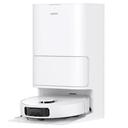
Mova E40 Ultra vs Roborock QV 35A
Suction is the headline split here: the Mova E40 Ultra pulls 19,000 Pa with a rubber-and-bristle brush that has a built-in hair cutter, and it runs for 260 minutes per charge. The Roborock QV 35A trades that pulling power for smarter obstacle handling, using 3D structured light on top of LiDAR plus 30 water flow levels for finer mopping control. Homes with pets and carpet lean Mova; cluttered floors and multi-level layouts lean Roborock.
 vs
Ecovacs DEEBOT T50 Pro Omni vs Mova P20 Ultra
Double the suction on paper doesn't mean double the cleaning in practice, and that's the core tension here. The Mova P20 Ultra brings 30,000 Pa, stronger mop pressure and faster spinning pads, so it's the pick for homes where deep carpet pickup and scrubbing dried-on messes matter most. The DEEBOT T50 Pro Omni counters with genuine obstacle avoidance, an RGB-D camera, smart dirt detection and a long 255-minute runtime, making it the safer choice for cluttered, larger homes where the robot needs to think its way around socks and chair legs.
 vs

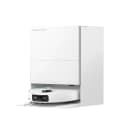
Dreame X60 Ultra vs Ecovacs DEEBOT X12 OmniCyclone
Two different mopping philosophies drive this matchup: the Dreame X60 Ultra uses dual spinning pads pressed down with 15 N of force and washes them in 212°F water, while the DEEBOT X12 OmniCyclone runs a newer roller mop with a wider moisture range. The Dreame is the stronger pick for homes with pets, thick carpet, and clutter thanks to 35,000 Pa of suction, a dual brush setup, and a dock that holds twice the debris. The Ecovacs makes more sense for large single-floor spaces where a 200-minute run time and a lower price matter more than peak power.
 vs
Ecovacs DEEBOT X11 OmniCyclone vs Mova P20 Ultra
The DEEBOT X11 OmniCyclone wins on brains: AI plus camera plus 3D structured light obstacle avoidance, a 40 mm obstacle clearance for climbing thresholds, smart dirt detection, and a roller mop that self-cleans as it works. The Mova P20 Ultra counters with far stronger 30,000 Pa suction, dual spinning mop pads pressing at 12 N, a bigger dock, and a much lower price. Buyers with cluttered, multi-story homes should take the Ecovacs; buyers who want scrubbing muscle and long dock intervals for less money should take the Mova.
vseufy X10 Pro Omni vs Roborock QV 35A
Both robots run dual spinning mop pads, LiDAR navigation, and auto-emptying docks, so the real split comes down to how they see obstacles. The eufy X10 Pro Omni adds an RGB camera with an LED light for identifying clutter in dim rooms, plus higher mop lifting and five floor maps. The Roborock QV 35A leans on 3D structured light instead, and pairs bigger dock tanks with Apple voice support, which suits buyers who want longer stretches between refills and a lower price.
vs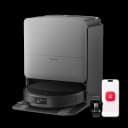
Dreame Matrix10 Ultra vs Roborock Saros 20
Both robots run dual spinning mop pads, LiDAR plus camera navigation, and fully self-maintaining docks, so the split comes down to details. The Matrix10 Ultra layers on extras that make hands-off cleaning easier: mop switching, a liftable side brush, a headlight for dark rooms, bigger dock tanks, and a three-year warranty. The Saros 20 pushes harder on suction and mop specifics, lifts its mop pads higher for carpet transitions, and costs noticeably less.
 vs
Ecovacs DEEBOT T50 Max Pro Omni vs Mova P20 Ultra
Suction numbers point one way and everything else points the other. The Mova P20 Ultra pulls a stronger 30,000 Pa and holds a bit more water and dust in its dock, but the DEEBOT T50 Max Pro Omni brings AI obstacle avoidance with an RGB-D camera and 3D structured light, smart dirt detection, an extendable side brush, a liftable main brush, and automatic detergent dispensing. Go Ecovacs for smarter, more automated cleaning in a furniture-filled home; go Mova if peak suction on a per-pass basis is what you care about most.
vs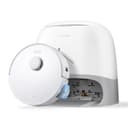
Dreame X60 Ultra vs Roborock Qrevo Curv 2 Flow
Suction is where these two split hardest: the Dreame X60 Ultra pulls 35,000 Pa against the Qrevo Curv 2 Flow's 20,000 Pa, and it backs that up with an extendable side brush, a bigger dust bag, and a dock that adds detergent when it washes the mop pads. The Roborock counters with a roller mop, higher mop lifting for carpet transitions, and a price that lands well below the Dreame. Homes with pets, thick rugs, and a preference for hands-off upkeep should lean Dreame; anyone who mostly mops hard floors and wants to spend less gets a lot of the same automation from the Roborock.
vs
Dyson Spot+Scrub Ai vs Mova MOBIUS 60
Dyson's roller mop is the more advanced mopping hardware on paper, and its larger onboard water tank keeps that roller fed during long runs, making it a strong pick for homes that are mostly hard floors. The Mova MOBIUS 60 counters with far more suction, a dual brushroll, an extendable side brush, and a dock that washes and dries mop pads at much higher temperatures. Buyers who want the deeper feature list and stronger pickup on mixed flooring should go with the Mova; those drawn to Dyson's mopping approach and dual side brushes will be happy with the Spot+Scrub Ai.
 vs
Dreame L60 Ultra FE vs Mova MOBIUS 60
The Mova MOBIUS 60 wins on the hardware that actually changes how a clean turns out: dual brush rolls, faster-spinning mop pads with more downward pressure, hot air mop drying, and a much richer obstacle detection stack that adds a camera and LED light to the structured light system. The Dreame L60 Ultra FE holds its ground on endurance, running longer per charge and covering more ground in a single session, and it costs noticeably less. Buyers who want the most complete automation should stretch for the Mova; those cleaning large single-story floors on a tighter budget still get a capable LiDAR mopper from the Dreame.
vsDreame Matrix10 Ultra vs Roborock Qrevo Curv 2 Flow
The Dreame Matrix10 Ultra brings more suction, a bigger dock with automatic detergent dispensing, hotter mop washing, and an extendable side brush that reaches into corners, making it the stronger pick for homes with pets, carpet, and lots of furniture legs. The Roborock Qrevo Curv 2 Flow counters with a roller mop that continuously self-cleans as it works, a taller mop lift for carpet transitions, and a price that lands far below the Dreame. Buyers who mop hard floors daily and want to spend less will be happy with the Roborock; those who want the deepest vacuuming and the most automated dock should go Dreame.
 vs
Dreame Aqua10 Roller vs Ecovacs DEEBOT X11 OmniCyclone
Both of these use roller mops, the newest and most effective mopping approach, so the decision comes down to hardware muscle versus navigation polish. The Aqua10 Roller brings 30,000 Pa of suction, a dual brush setup, hotter mop washing, and bigger dock tanks, making it the pick for pet households and multi-level homes. The DEEBOT X11 OmniCyclone counters with sharper obstacle handling, a 254-minute run time, liftable brushes, and a self-cleaning dock, all at a lower price.
vs
Dreame Aqua10 Roller vs Mova P50 Ultra
Roller mop technology and 30,000 Pa of suction put the Dreame Aqua10 Roller ahead on pure cleaning hardware, backed by a dual rubber-and-bristle brush, anti-tangle design, and hot air mop drying in the dock. The Mova P50 Ultra costs roughly half as much and still delivers LiDAR plus camera navigation, dual spinning mop pads, a self-cleaning dock, and a liftable side brush. Homes with pets and heavy floor-mopping needs lean Dreame; budget-conscious buyers who want most of the automation get more than they pay for with the Mova.
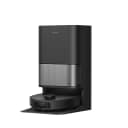 vs
Dreame L40s Ultra vs eufy X10 Pro Omni
Suction is where these two split hardest: the Dreame L40s Ultra pulls 19,000 Pa through a dual brush setup, more than double the eufy X10 Pro Omni's 8,000 Pa single brush. The eufy counters with camera-plus-LED obstacle spotting and mapping for up to five floors, making it the sharper navigator in cluttered rooms. Homes with carpet, pets, and a preference for a better-equipped dock should lean Dreame; apartments with hard floors, tight furniture, and a tighter budget fit the eufy well.
vs
Dreame D30 Ultra CE vs eufy Omni E25
The eufy Omni E25 wins on almost every practical front: a roller mop that presses down with 14.7 N of pressure, dual brushes with anti-tangle protection, camera-based obstacle avoidance, and auto detergent dispensing. The Dreame D30 Ultra CE counters with more suction at 25,000 Pa, a longer 230-minute runtime, and much bigger dock tanks, which suits large hard-floor homes where refilling less often matters. Buyers with pets, cluttered floors, or heavy mopping needs should take the eufy; those wanting maximum suction and dock capacity for less money should look at the Dreame.
vsDreame D30 Ultra CE vs Mova P20 Ultra
The Dreame D30 Ultra CE leans on smarter navigation, using 3D structured light obstacle avoidance to steer around cords, socks, and pet messes that the Mova P20 Ultra will simply drive over. The Mova counters with stronger hardware: 30,000 Pa of suction, an anti-tangle brush, 12 N of mop pressure, and a dock that washes pads with hot water at 167 °F. Pick the Dreame for cluttered floors and hands-off reliability, the Mova for deeper scrubbing and pet hair that wraps around brushrolls.
 vs
Dreame Aqua10 Ultra Roller vs eufy Omni E25
Both robots use roller mops and both wash and dry their own pads, so the real decision is how much extra automation matters to you. The Aqua10 Ultra Roller pushes harder on every front: 30,000 Pa suction, a 212°F mop wash, extendable mopping, and brushes that lift for carpet. The Omni E25 keeps the core experience intact, runs 216 minutes on a charge, covers 1,600 sq ft in a single run, and costs noticeably less.
vsDreame Aqua10 Roller vs Dyson Spot+Scrub Ai
Both robots use roller mops, but the Dreame Aqua10 Roller backs its up with 30,000 Pa of suction, a dual rubber-and-bristle brush, and a dock that washes pads at 212 °F. The Dyson Spot+Scrub Ai counters with a 200-minute run time, two side brushes, and a larger onboard water tank, making it a fit for sprawling single-floor layouts where fewer recharge breaks matter more than deep-clean muscle.
vs
Dreame L40s Ultra vs Mova P50 Pro Ultra
The Dreame L40s Ultra takes the cleaning side of this matchup with its dual rubber-and-bristle brush, anti-tangle design, and a dock that air dries mop pads after washing them. The Mova P50 Pro Ultra answers with sharper obstacle handling, pairing a camera and LED light with AI and 3D structured light, plus smart dirt detection that ramps up cleaning where the floor needs it. Pick the Dreame for stronger everyday pickup and hands-off mop maintenance, and the Mova if navigating a cluttered, toy-strewn home matters more.
vsEcovacs DEEBOT X12 OmniCyclone vs Mova MOBIUS 60
The DEEBOT X12 OmniCyclone leans on a roller mop and RGB-D camera navigation, making it the smoother operator for multi-story homes packed with furniture. The MOBIUS 60 counters with more hardware: dual brushes, 30,000 Pa suction, hot water mop washing, and a dock that holds roughly double the debris and water. Pick the Ecovacs for navigation confidence and continuous roller mopping, the Mova if you want the deeper feature set and longer stretches between dock refills.
vsDreame Aqua10 Roller vs Ecovacs DEEBOT X12 OmniCyclone
Both robots use roller mops, LiDAR plus camera navigation, and self-emptying docks, so the decision comes down to hardware muscle versus polish. The Aqua10 Roller brings stronger suction, a dual brush setup, an extendable side brush, and a dock with hot water mop washing and heated drying, plus a three-year warranty. The DEEBOT X12 OmniCyclone counters with a documented 200-minute run time covering 1,277 sq ft per charge, a quieter 61 dB, and a dock that cleans itself.
vsMova MOBIUS 60 vs Roborock Qrevo Curv 2 Flow
Mopping style is the real fork in the road here. The MOBIUS 60 uses dual spinning mop pads that scrub with active pressure, backed by 30,000 Pa of suction, a 212 °F wash-and-dry cycle, and automatic detergent dosing, making it the stronger pick for homes with a lot of hard flooring and heavier debris. The Qrevo Curv 2 Flow counters with a roller mop, a second side brush, and a liftable main brush that keeps hair from wrapping during carpet passes, so it suits buyers who want continuous-rinse mopping and a slightly lower price.
vsDreame Aqua10 Roller vs Roborock Qrevo Curv 2 Flow
Both robots use roller mops and dual-sensor navigation, so the real split comes down to cleaning muscle versus dock refinement. The Dreame Aqua10 Roller pulls ahead with 30,000 Pa of suction, a bigger battery, an extendable side brush that reaches into corners, and hotter mop washing plus automatic detergent dispensing. The Roborock Qrevo Curv 2 Flow answers with two side brushes, liftable brushes that keep hair and mop pads out of trouble, stronger 15 N mop pressure, and a self-cleaning dock base.
 vs
Dreame X40 Ultra vs Mova P10 Pro Ultra
The Mova P10 Pro Ultra costs significantly less and cleans harder, with 13,000 Pa of suction and a 198-minute run time that covers big floor plans in a single pass. The Dreame X40 Ultra answers with automation extras: it automatically detaches its mop pads before rolling onto carpet, lifts its main brush, and adds Apple voice control to the mix. Buyers who want maximum cleaning per dollar should look at the Mova, and those who want the fussiest carpet-and-mop handling done for them should look at the Dreame.
 vs
Dreame L40s Ultra AE vs Mova P50 Pro Ultra
The Dreame L40s Ultra AE is the stronger cleaner, with a hair-cutting brush that stops long hair from wrapping the roller, a bigger onboard dustbin, and a dock that air-dries the mop pads after every wash. The Mova P50 Pro Ultra costs noticeably less and answers with an extendable, liftable side brush that reaches deeper into corners plus longer runtime per charge. Households with pets and lots of hard flooring should lean Dreame; budget-focused buyers who want solid all-around automation get most of the experience from the Mova.
 vs
Dreame X50 Ultra vs Mova P50 Pro Ultra
The X50 Ultra earns its place with a dual rubber-and-bristle brush, anti-tangle hardware, a 60 mm obstacle clearance that lets it step over thresholds and cords, and a dock that air-dries the mop pads after washing them at 176 °F. The P50 Pro Ultra covers most of the same ground (dual spinning mops, LiDAR plus camera navigation, self-emptying, multi-level maps) at a much lower cost. Buyers with pets, thick rugs, and cluttered floors should stretch for the Dreame; everyone else gets the bulk of the experience from the Mova.
vseufy Omni E25 vs Mova P20 Ultra
The eufy Omni E25 wins on brains: camera-based obstacle avoidance, smart dirt detection, dual side brushes and a dual rubber-and-bristle roller give it the more complete cleaning package for everyday messes and cluttered floors. The Mova P20 Ultra counters with stronger 30,000 Pa suction, dual spinning mop pads, hot-water mop washing at 167 °F and much larger dock tanks, so it suits hard-floor homes where mopping matters most and the budget is tighter.
vseufy Omni E25 vs Mova MOBIUS 60
The Mova MOBIUS 60 packs in nearly every automation feature available: 30,000 Pa suction, dual spinning mop pads that extend to reach edges and lift away automatically for carpet, plus a dock that washes with 212°F water and cleans itself. The eufy Omni E25 counters with a roller mop, two side brushes, longer runtime, and a sharper price. Buyers who want maximum hands-off automation should go Mova; those who want strong everyday cleaning with less spent up front will be happy with the eufy.
vsDreame L40s Ultra vs Mova P50 Ultra
Both robots run dual spinning mop pads and LiDAR mapping, so the real split is hardware versus brains. The Dreame L40s Ultra brings a dual rubber-and-bristle brush with anti-tangle, heated mop drying in the dock, and a 220-minute run time, making it the stronger pick for pet homes and big floor plans. The Mova P50 Ultra layers a camera, LED light, and AI onto its obstacle avoidance and adds smart dirt detection, which suits cluttered rooms and people who want the robot to think more for itself.
vsEcovacs DEEBOT T50 Pro Omni vs eufy X10 Pro Omni
Suction is where these two split hardest: the DEEBOT T50 Pro Omni pushes 15,000 Pa against the X10 Pro Omni's 8,000 Pa, and it backs that up with hot-water mop washing, auto detergent dispensing, and an extendable side brush for corners. The eufy answers with better multi-floor coverage (up to 5 saved maps versus 2), a lit camera for dark rooms, and a heavier mop pressure spec. Homes with pets and carpet lean Ecovacs; sprawling multi-story layouts lean eufy.
 vs

Dreame L60 Ultra PE vs Mova Z60 Ultra Roller SA
Two different approaches to mopping sit at the center of this matchup: the Dreame L60 Ultra PE uses dual spinning pads that press down at 13 N and spin at 165 RPM, and the Mova Z60 Ultra Roller SA uses a roller mop, the newest design in the category. The Dreame pulls ahead on suction (30,000 Pa versus 26,000 Pa), climbs taller thresholds at 40 mm, maps up to four floors, and adds Apple voice control. The Mova costs noticeably less, runs a bigger 6,400 mAh battery, dries its mop at a hotter 145 °F, and fits a much shallower dock.
vsDreame L60 Ultra FE vs Mova Z60 Ultra Roller SA
Two different mopping philosophies are on the table here: the Dreame L60 Ultra FE uses dual spinning pads that scrub with 10 N of pressure, and the Mova Z60 Ultra Roller SA uses a roller mop, the newest approach to keeping a wet surface constantly rinsed against the floor. The Mova pulls ahead on navigation with an RGB camera, LED light, and AI-assisted obstacle detection layered on top of LiDAR and structured light, plus smart dirt detection and dual main brushes. The Dreame answers with stronger 30,000 Pa suction, a longer 240-minute run time, and Apple voice support.
 vs

Mova V50 Ultra Complete vs Roborock Saros 10
Mova's V50 Ultra Complete leans into scrubbing and suction: dual spinning mop pads that actively work floors, 24,000 Pa of suction, a bigger dust bag, and a three-year warranty. The Roborock Saros 10 counters with a deeper automation stack, including automatic mop pad removal before carpets, heated air drying of the pads, and a documented 220-minute runtime covering up to 2,500 sq ft. Pick the Mova for stronger floor scrubbing and pickup at a lower cost, and the Saros 10 if hands-off dock maintenance and long single-run coverage matter more.
 vs
Dreame L50 Ultra vs Roborock Saros 10
The Dreame L50 Ultra scrubs better and climbs higher, thanks to dual spinning mop pads and a 60 mm obstacle clearance that lets it hop over thick rug edges and thresholds the Roborock Saros 10 has to route around. The Saros 10 answers with 22,000 Pa of suction, a longer 220-minute run time, and an 18 mm mop lift that keeps pads well clear of carpet. Go Dreame for stronger floor scrubbing and better value; go Roborock for bigger single-run coverage and a more feature-loaded package.
 vs
Narwal Flow vs Roborock Saros 10
The Narwal Flow leans on a roller mop that scrubs with 12 N of downward pressure and gets backed by two side brushes, making it the stronger pick for hard floors and edge pickup. The Roborock Saros 10 counters with a deeper automation stack: automatic mop pad detachment before carpet, detergent added during dock washing, a liftable main brush and side brush, an extendable side brush, and a 140 °F drying cycle. Pick the Flow for cleaning fundamentals and a longer warranty, the Saros 10 for the hands-off dock experience and longer runtime.
vs
Dreame X50 Ultra vs Roborock Qrevo Curv
Both robots use dual spinning mop pads, LiDAR mapping, and self-emptying docks, so the decision comes down to reach versus refinement. The Dreame X50 Ultra pushes harder on cleaning hardware and dock automation with 20,000 Pa suction, a bigger dust bag, automatic detergent dispensing, and mop pads that detach on their own before carpet. The Qrevo Curv is the pick for larger single-level homes, covering 4,305 sq ft in one run and lifting its mop 17 mm to keep rugs dry.
vs
Roborock Qrevo Curv vs Roborock Saros 10R
Both of these Roborock machines run dual spinning mop pads, LiDAR plus 3D structured light obstacle avoidance, and self-emptying docks, so the decision comes down to endurance versus refinement. The Qrevo Curv covers 4,305 sq ft on a charge, runs quieter at 61 dB, and applies 12 N of mop pressure, which suits large homes with a lot of hard floor. The Saros 10R is the more automated of the two, with a slimmer 3.1-inch body that slides under low furniture, automatic detergent dosing in the dock, a side brush that lifts 22 mm, and mop pads it detaches on its own before hitting carpet.
vsDreame L50 Ultra vs Roborock Qrevo Curv
Both robots use dual spinning mop pads, LiDAR mapping, and self-emptying docks, so the decision comes down to how your home is shaped and how much automation you want at the dock. The Dreame L50 Ultra pulls ahead with stronger suction, a bigger dustbin and dust bag, automatic detergent dispensing, higher obstacle clearance, and a three-year warranty. The Qrevo Curv is the pick for large open floor plans, covering more than double the square footage in a single run and lifting its mop pads higher over thick carpet.
vsDreame Aqua10 Roller vs Mova P20 Ultra
The Aqua10 Roller brings a roller mop, a dual brush setup, and camera-plus-structured-light obstacle avoidance that lets it identify and steer around clutter, and it clears obstacles up to 60 mm. The P20 Ultra relies on LiDAR mapping alone with dual spinning mop pads and a single rubber brush, which handles open, tidy floors well at roughly half the cost. Go with the Aqua10 Roller for messy, high-traffic homes with pets and kids; the P20 Ultra makes sense when budget matters more than obstacle smarts.
vs
Dyson Spot+Scrub Ai vs Mova Z60 Ultra Roller Complete
Both machines use roller mops, LiDAR plus camera navigation, and self-emptying docks, so the split comes down to hardware depth. The Mova Z60 Ultra Roller Complete pulls ahead with 28,000 Pa suction, a dual brushroll, an extendable side brush, 3D structured light obstacle detection, and a bigger dock water supply. The Dyson Spot+Scrub Ai suits buyers who want Apple HomeKit support, two side brushes, a larger onboard water tank, and confirmed mapping for up to three floors.
vsEcovacs DEEBOT X12 OmniCyclone vs Mova Z60 Ultra Roller SA
Both robots run roller mops, LiDAR plus camera navigation, and self-emptying docks, so the decision comes down to what you want to spend and where you want the strength. The Mova Z60 Ultra Roller SA brings more suction at 26,000 Pa, a dual main brush, extendable and liftable brushes, a hot-water mop wash at 176 °F, and a three-year warranty for noticeably less money. The Ecovacs DEEBOT X12 OmniCyclone answers with better obstacle handling, clearing thresholds up to 40 mm, an RGB-D camera, Apple voice support, and 50 mop moisture levels for fine-tuning how wet your floors get.
vsDreame L60 Ultra FE vs Mova Z60 Ultra Roller Complete
Two different mopping philosophies sit at the center of this matchup: the Dreame L60 Ultra FE uses dual spinning mop pads with 10 N of downward pressure, and the Mova Z60 Ultra Roller Complete uses a roller mop, the newest approach on the market. The Mova pulls ahead on obstacle handling thanks to its camera, LED light, and AI-assisted avoidance, plus liftable brushes and smart dirt detection. The Dreame answers with a slightly higher 30,000 Pa suction, a longer 240-minute run time, and bigger dock water tanks.
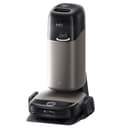 vs
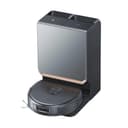
eufy Omni S2 vs Narwal Flow 2
Both robots use roller mops, so this comes down to how each one executes the details. The eufy Omni S2 scrubs harder (240 RPM roller versus 80 RPM, 15 N of pressure versus 12 N), sweeps edges better with two side brushes including an extendable arm, and holds more debris in its 3 L dock bag. The Narwal Flow 2 counters with sharper navigation around clutter and tight layouts, plus built-in voice control that works without pulling out your phone, making it the pick for homes full of chair legs, cords, and pet toys.
vsDreame Aqua10 Ultra Roller vs Mova Z60 Ultra Roller SA
Both of these use roller mops and self-maintaining docks, so the real decision comes down to how much extra hardware matters to you. The Dreame Aqua10 Ultra Roller pushes harder on specs with 30,000 Pa suction, hotter mop washing and drying, four-level mapping, and an 80 mm obstacle clearance for climbing over thresholds and rug edges. The Mova Z60 Ultra Roller SA runs longer at 220 minutes, weighs less, uses a much slimmer dock, and costs about half as much for very similar day-to-day cleaning.
vsDreame X50 Ultra vs Mova V50 Ultra Complete
Both robots run dual spinning mop pads, LiDAR plus camera navigation, and self-emptying docks, so the split comes down to how much automation you want at the dock. The X50 Ultra adds automatic mop pad removal before carpet, mop pad air drying, larger dock water tanks, and a 220 minute runtime covering 2,208 sq ft in a single pass. The V50 Ultra Complete counters with 24,000 Pa of suction and 8 N of downward mop pressure at a noticeably lower price, which makes it the pick for carpet-heavy homes on a tighter budget.
vsEcovacs DEEBOT X12 OmniCyclone vs Mova Z60 Ultra Roller Complete
Both of these use roller mops, LiDAR plus camera navigation, and self-emptying docks, so the decision comes down to how you weight cleaning hardware against navigation polish. The Mova Z60 Ultra Roller Complete brings more suction, dual brushes, liftable brushes, hot water mop washing, and a bigger dust bag, making it the stronger pick for pet owners and heavy-traffic homes. The Ecovacs DEEBOT X12 OmniCyclone reads rooms more reliably with its RGB-D camera and handles multi-story mapping cleanly, which matters more in furniture-packed layouts.
vsDreame L40s Ultra vs Mova P10 Pro Ultra
The Dreame L40s Ultra hits harder on the floor itself, with 19,000 Pa of suction, a dual rubber-and-bristle brush, and anti-tangle hardware that keeps hair off the roller. The Mova P10 Pro Ultra trades some of that muscle for sharper eyes, pairing LiDAR with an RGB camera, AI obstacle recognition, and an LED light for dim rooms, and it costs noticeably less. Homes with pets and carpet lean Dreame; cluttered floors and tight budgets lean Mova.
vsMova Z60 Ultra Roller SA vs Roborock Qrevo Curv 2 Flow
Both robots run roller mops and dual-sensor navigation, but the Mova Z60 Ultra Roller SA pulls ahead on the fundamentals: 26,000 Pa of suction versus 20,000 Pa, a bigger dock dust bag, automatic detergent dispensing, and hotter mop washing and drying cycles. The Roborock Qrevo Curv 2 Flow answers with two side brushes, a larger onboard dustbin, four-floor mapping, and Apple voice support. Pick the Mova for stronger cleaning and a more self-sufficient dock, and the Roborock if Apple voice control and multi-story mapping headroom top your list.
vsDreame Aqua10 Ultra Roller vs Mova Z60 Ultra Roller Complete
Both robots use roller mops, dual-sensor navigation, and hands-off docks, so the decision comes down to intensity versus endurance. The Dreame Aqua10 Ultra Roller pushes harder on every cleaning number: more suction, hotter mop washing at 212°F, warmer drying air, and Apple support alongside the usual voice platforms. The Mova Z60 Ultra Roller Complete runs 45 minutes longer per charge, weighs less, adds a self-cleaning dock, and costs less, which makes it the practical pick for large single-story homes.
vsNarwal Flow 2 vs Roborock Saros 10R
Mopping style is the real fork in the road here. The Narwal Flow 2 uses a roller mop with 12 N of downward pressure and a bigger onboard water tank, plus 30,000 Pa of suction for deep carpet work, making it the pick for homes with lots of hard floor and heavy pet shedding. The Roborock Saros 10R counters with dual spinning mop pads that lift 10 mm for carpets, a dual brush system, an extendable side brush, and a dock with 4 L clean and 3 L dirty water tanks, which suits large multi-room homes that want longer unattended runs.
vsMova Z60 Ultra Roller SA vs Narwal Flow
Both robots use roller mops and the same LiDAR-plus-camera navigation stack, so the real split comes down to automation depth and cleaning muscle. The Mova Z60 Ultra Roller SA brings 26,000 Pa suction, an extendable side brush, liftable brushes, auto detergent dispensing, and a hotter mop-drying cycle, making it the stronger pick for homes with carpet, pets, and lots of edges. The Narwal Flow makes sense if clearing taller obstacles, mapping a fourth floor level, and a documented 57 dB vacuum noise level matter more than the extra automation.
vsDyson Spot+Scrub Ai vs Roborock Saros 10R
Roborock's Saros 10R takes the lead where it counts for most homes: a dual main brush, smarter obstacle detection using AI and 3D structured light, a 40 mm obstacle clearance, and a dock with bigger clean and dirty water tanks. Dyson's Spot+Scrub Ai counters with a roller mop, a much larger onboard water tank, two side brushes, and a 200-minute run time, all at a noticeably lower price. Buyers who mop constantly and want to spend less will like the Dyson; anyone who wants the more capable all-around cleaner should take the Roborock.
vsMova Z60 Ultra Roller Complete vs Roborock Qrevo Curv 2 Flow
Both of these use roller mops, the newest and most effective mopping design, so the decision comes down to everything wrapped around that roller. The Mova Z60 Ultra Roller Complete pulls ahead on vacuuming muscle with 28,000 Pa, a bigger dust bag, an extendable side brush, and a dock that adds detergent automatically when it washes the roller. The Roborock Qrevo Curv 2 Flow answers with two side brushes, a larger onboard dustbin, Apple voice support, and published mop pressure and speed figures for buyers who want hard-floor scrubbing detailed on paper.
vsDreame L50 Ultra vs Mova V50 Ultra Complete
Suction numbers favor the Mova V50 Ultra Complete at 24,000 Pa, but the Dreame L50 Ultra counters with a bigger dustbin, automatic mop pad detachment before carpets, and a dock that air-dries the pads after washing. Homes with heavy carpet and pet hair get more out of the Mova's stronger pull, and buyers who want the most hands-off maintenance routine across a large mixed-flooring home will prefer the Dreame.
vsDreame Aqua10 Ultra Roller vs Roborock Saros 10R
Hardware-wise, the Dreame Aqua10 Ultra Roller brings more muscle: 30,000 Pa of suction, a roller mop with 11 N of pressure, hotter mop washing and drying, and larger dock tanks. The Roborock Saros 10R counters with sharper real-world navigation, a longer 180-minute run time covering up to 2,150 sq ft, a self-cleaning dock base, and mop pads that automatically detach before the robot moves onto carpet. Go with the Dreame for deeper cleaning specs at a lower price, and the Roborock if flawless movement around clutter and hands-off dock upkeep matter more.
vsDreame X50 Ultra vs Roborock Saros 20
The Saros 20 pushes harder on cleaning hardware, with 36,000 Pa of suction, 13 N of mop pressure, and a dock that washes pads at 212 °F. The X50 Ultra counters with longer endurance, a bigger dock reservoir setup, a liftable side brush, and an LED-assisted obstacle avoidance system that reads the room better in dim conditions. Buyers with heavy carpet and pet hair lean Roborock; buyers covering large floor plans on a tighter budget get more per dollar from Dreame.
vsDreame X50 Ultra vs Narwal Flow
Mopping style is the real fork in the road here. The Narwal Flow uses a roller mop that continuously rinses itself as it cleans, backed by 12 N of pressure and a 12 mm mop lift, which makes it the stronger pick for homes dominated by hard floors. The Dreame X50 Ultra counters with dual spinning mop pads that detach automatically before carpet, a taller 60 mm obstacle clearance, longer 220-minute runtime, and a dock that adds detergent on its own, making it the more complete automation package for mixed-flooring homes.
vsDreame X60 Ultra vs Roborock Saros 10R
Suction is where these two split hardest: the Dreame X60 Ultra pushes 35,000 Pa against the Saros 10R's 19,000 Pa, and it backs that up with a bigger dust bag, hotter mop washing, and a three-year warranty. The Roborock counters with proven range figures, a documented 180-minute run time covering 2,150 sq ft per charge, and heated air drying for its mop pads. Go Dreame for deep-cleaning muscle and long-term coverage, Roborock for big-floorplan endurance and dock-side mop drying.
vsNarwal Flow 2 vs Roborock Saros 20
Narwal's roller mop keeps a continuously rinsed surface against your floors, which suits homes where sticky kitchen messes and daily hard-floor upkeep dominate. Roborock's Saros 20 counters with dual spinning mop pads at 200 RPM, higher 36,000 Pa suction, an extendable side brush, and pads that automatically lift and detach before carpet. Pick the Flow 2 for straightforward mopping and a longer warranty, or the Saros 20 for stronger vacuuming and more hands-off automation.
vs
Dreame L50 Ultra vs Roborock Qrevo CurvX
The Qrevo CurvX pulls ahead on the fundamentals that show up during a cleaning run: stronger 22,000 Pa suction, a 200 RPM dual spinning mop that presses down with 12 N of force, and enough battery to cover 4,305 sq ft before it needs a break. The L50 Ultra counters at the dock, with automatic detergent dispensing, larger clean and dirty water tanks, a bigger dust bag, and a three-year warranty instead of one. Big open floor plans and heavy carpet favor the Roborock; homes that want longer stretches between dock refills and less frequent maintenance lean Dreame.
 vs
Dreame L10s Ultra Gen 2 vs Mova P10 Pro Ultra
The Mova P10 Pro Ultra does more of the heavy lifting: 13,000 Pa of suction, an extendable side brush that reaches into corners, hot water mop washing at 158°F, and an obstacle avoidance stack that pairs AI, a camera, 3D structured light, and an LED lamp for dark rooms. The Dreame L10s Ultra Gen 2 counters with a broader voice assistant lineup that includes Apple alongside Amazon and Google, plus a slimmer dock that fits tighter spaces. Homes with pets, complex layouts, or multiple floors are better served by the Mova, and Apple-centric smart homes with a narrow dock nook are the case for the Dreame.
vsNarwal Flow 2 vs Roborock Qrevo Curv 2 Flow
Both robots use roller mops and dual-sensor navigation, so the real split comes down to how they clean. The Narwal Flow 2 brings 30,000 Pa of suction, a larger battery, taller 40 mm obstacle clearance, and a dock that adds detergent when washing the mop roller, making it the pick for pet homes and cluttered multi-story layouts. The Roborock Qrevo Curv 2 Flow spins its roller mop faster at 220 RPM with 15 N of pressure, adds a second side brush and a dual main brush, and costs less, which suits homes that are mostly hard floors.
vsNarwal Flow vs Narwal Flow 2
Both robots run the same roller mop system and dual-sensor navigation, so the real split comes down to how they clean and how much the dock does on its own. The Flow 2 pulls harder at 30,000 Pa, adds automatic detergent dispensing and a self-cleaning dock, and lifts its main brush away from wet floors. The original Flow answers with a faster 110 RPM roller mop, a second side brush, and a combo bristle-and-rubber main brush, all for noticeably less money.
vsDreame X60 Ultra vs Narwal Flow 2
The Dreame X60 Ultra takes the harder-working approach: dual brushes, an extendable side brush that reaches into corners, 35,000 Pa of suction, and dual spinning mop pads that press down with 15 N of force. The Narwal Flow 2 counters with a roller mop that keeps a continuously rinsed surface against your floors plus a bigger onboard water tank, and it costs noticeably less. Buyers who want the strongest all-around carpet and hard floor cleaning should take the Dreame; buyers focused on hard floor mopping value who don't mind a single brush setup will be happy with the Narwal.
 vs
Dreame X60 Max Ultra Complete vs Roborock Saros 20
Both machines run dual spinning mop pads, LiDAR plus camera navigation, and fully automated docks, so the split comes down to small details. The Dreame X60 Max Ultra Complete pushes harder on the floor with 15 N of mop pressure, 230 RPM pads, a liftable side brush, and an LED-assisted obstacle system, making it the pick for cluttered, pet-heavy homes. The Roborock Saros 20 counters with slightly higher 36,000 Pa suction, a bigger onboard dustbin, dust bag drying in the dock, and a shallower footprint requirement is where it loses ground, so it suits hard-floor-heavy homes that want a tidy, odor-free dock.
vsDreame X60 Ultra vs Dyson Spot+Scrub Ai
The Dreame X60 Ultra brings nearly double the suction, a dual-brush roller setup, and dual spinning mop pads that press down with real force, making it the stronger cleaner on both carpet and hard floors. Dyson's Spot+Scrub Ai counters with a roller mop, two side brushes, and a larger onboard water tank, so it holds its own on hard-floor homes at a noticeably lower price. Buyers who want the most capable all-around cleaner should go Dreame; those focused on hard floors and spending less will be happy with the Dyson.
vsDreame X60 Ultra vs Roborock Saros 20
Both robots run dual spinning mop pads, LiDAR, and self-cleaning docks, so the split comes down to execution details. The Dreame X60 Ultra pushes harder on mopping (15 N of pressure at 230 RPM), adds a second RGB camera plus an LED light for dark rooms, lifts its side brush over rugs, and backs it all with a three-year warranty. The Saros 20 counters with slightly higher suction, a bigger onboard dustbin, heated air drying at 131 °F, and a 20 mm mop lift that clears thicker carpet.
vsNarwal Flow vs Roborock Qrevo Curv 2 Flow
Both of these use roller mops and dual-sensor navigation, so the decision comes down to how they handle obstacles and how much automation you want built into the dock. The Narwal Flow clears taller thresholds and cords (40 mm versus 20 mm), pulls 22,000 Pa of suction, and backs it all with a three-year warranty. The Roborock Qrevo Curv 2 Flow counters with a faster-spinning roller mop, more downward mop pressure, lifting brushes that keep hair from tangling on carpet, and a self-cleaning dock.
vsDreame X60 Ultra vs Mova MOBIUS 60
Both robots run dual spinning mop pads, LiDAR plus camera navigation, and self-washing docks, so the split comes down to how hard each one pushes. The Dreame X60 Ultra pulls ahead with 35,000 Pa of suction, 15 N of mop pressure, dual RGB cameras, and a liftable main brush that keeps hair off the roller on carpet. The Mova MOBIUS 60 costs noticeably less and answers with a 180-minute run time, a larger onboard dustbin, mop switching, and hot-air drying at 212°F.
vsDreame X50 Ultra vs Roborock Saros 10
Dreame's X50 Ultra leans on dual spinning mop pads and taller obstacle clearance, which makes it the stronger pick for homes with textured floors, thresholds, and cluttered rooms. Roborock's Saros 10 counters with 22,000 Pa of suction, a 18 mm mop lift that keeps pads well clear of carpet, and more square footage per charge. Pick the Dreame for scrubbing power and a longer warranty, the Roborock for larger open floor plans and carpet-heavy layouts.
vsDreame L50 Ultra vs Roborock Saros 10R
Both machines run dual spinning mop pads, LiDAR plus camera navigation, and self-washing docks, so the split comes down to physical capacity and clearance. The Dreame L50 Ultra carries a bigger dustbin, a larger dust bag, and climbs 60 mm obstacles, backed by a 3-year warranty. The Saros 10R answers with a slimmer 3.1-inch body that slides under low furniture, a shorter dock, and slightly longer per-run coverage.
vseufy X10 Pro Omni vs Mova P10 Pro Ultra
The Mova P10 Pro Ultra hits harder where it counts for daily dirt pickup, with 13,000 Pa of suction, smart dirt detection, an extendable side brush that reaches into corners, and a dock that adds detergent when it washes the mop pads. The eufy X10 Pro Omni counters with a slightly higher mop lifting height, mapping for up to five floors, anti-tangle brush hardware, and a large stated coverage area per run. Homes with pets and carpet lean Mova; multi-story homes with lots of hard flooring and long hair to deal with lean eufy.
vsNarwal Flow vs Roborock Saros 10R
The Narwal Flow leads on cleaning hardware with a roller mop, higher 22,000 Pa suction, and two side brushes instead of one, all at a lower price. The Roborock Saros 10R answers with dock and automation polish: auto detergent dispensing, automatic mop pad detachment before carpets, an extendable side brush, and liftable brushes for cleaner carpet passes. Buyers focused on hard-floor mopping and value should look at the Flow, while those who want maximum edge coverage and automated carpet handling will prefer the Saros 10R.
 vs
eufy C10 vs eufy L60
Both of these eufy robots cover the same ground on paper: LiDAR mapping, multi-floor maps, no-go zones, auto-empty docks, and no mopping at all. The L60 pulls ahead on pure pickup with 5,000 Pa of suction and a bigger onboard dustbin, so it's the pick for shedding pets and carpet. The C10 counters with a slimmer 2.9-inch body that slides under low furniture, a much smaller dock footprint, a larger battery, anti-tangle brush hardware, and an extendable side brush for corners.
vsEcovacs DEEBOT T50 Max Pro Omni vs Mova P50 Ultra
The Mova P50 Ultra pulls ahead on navigation, with LED-assisted obstacle detection and mapping for up to four floors, plus slightly more suction and a bigger onboard dustbin. The Ecovacs DEEBOT T50 Max Pro Omni counters with an 18 mm mop lift for carpet transitions, a liftable main brush with anti-tangle protection, auto air drying in the dock, and a larger battery, all at a noticeably lower price. Go Mova for smarter, larger-home coverage; go Ecovacs if long-hair tangles, deeper mop lift, and cost control matter more.
vsDreame X40 Ultra vs Mova P50 Ultra
Suction is where these two split apart: the Mova P50 Ultra pulls 19,000 Pa against the Dreame X40 Ultra's 12,000 Pa, and it pairs that with slightly richer obstacle detection thanks to an added LED for low-light rooms. The Dreame counters with a bigger 6,400 mAh battery, a liftable main brush, mop pads that detach automatically before carpet runs, and heated air drying in the dock. Buyers with pets and lots of carpet lean Mova; buyers with large hard-floor homes and a mix of surfaces get more out of the Dreame's automation.
vs
Dreame L40 Ultra Gen2 vs Mova S20 Ultra
Suction is the dividing line here: the Dreame L40 Ultra Gen2 pulls 25,000 Pa and adds dual spinning mop pads with an extendable mop arm and extendable side brush for corners and baseboards. The Mova S20 Ultra counters with a dual rubber roller setup, a larger onboard dustbin, a 3-year warranty, and a much lower price. Homes with thick carpet, pets, and hard floors that need real scrubbing belong with the Dreame; apartments and mostly hard-floor homes get nearly the same automation from the Mova for far less.
vs
Dreame X60 Max Ultra Complete vs Roborock Saros Z70
The Dreame X60 Max Ultra Complete pulls harder (35,000 Pa versus 22,000 Pa), climbs higher over thresholds, and adds an LED to its obstacle-detection stack for better performance in dim rooms. The Roborock Saros Z70 counters with a mechanical arm that physically picks up socks and small clutter before vacuuming, plus a documented 180 minutes of runtime covering up to 2,314 sq ft. Go Dreame for deep cleaning muscle and confident navigation, Roborock if the pickup arm and coverage per charge matter more than peak suction.
vsDreame Matrix10 Ultra vs Roborock Saros Z70
The Dreame Matrix10 Ultra pulls ahead where it counts for everyday dirt: 30,000 Pa of suction, a bigger onboard dustbin, a larger dock dust bag, and 80 mm of obstacle clearance that lets it climb over thresholds and thick rug edges the Saros Z70 has to route around. Roborock's answer is a mechanical arm for handling small objects on the floor, a taller 22 mm mop lift that keeps pads well clear of carpet, and a noticeably lower price. Go Dreame for cleaning muscle and hands-off dock maintenance, Roborock if you want more coverage per run and the arm trick for less money.
vsDreame Aqua10 Ultra Roller vs Ecovacs DEEBOT X11 OmniCyclone
Both machines use roller mops with self-cleaning, self-drying docks, so the real split comes down to muscle versus value. The Dreame Aqua10 Ultra Roller pulls ahead with 30,000 Pa of suction, a dual-brush setup, a bigger dust bag, four-floor mapping, and a three-year warranty, making it the pick for large, multi-story, pet-heavy homes. The Ecovacs DEEBOT X11 OmniCyclone costs noticeably less, runs at a documented 61 dB, offers 50 water-flow levels for fine mop control, and adds dock self-cleaning, which suits smaller homes and noise-sensitive households.
vsDreame X60 Max Ultra Complete vs Roborock Saros 10R
Suction is where these two split hardest: the Dreame X60 Max Ultra Complete pulls 35,000 Pa against the Saros 10R's 19,000 Pa, and it backs that up with a bigger dust bag, heavier mop pressure, and a taller obstacle clearance for stepping over thresholds and clutter. The Roborock Saros 10R covers 2,150 sq ft in a single run, runs at a documented 65 dB, and costs substantially less for a nearly identical feature set. Homes with deep carpet and pets get more from the Dreame; larger open floorplans and budget-minded buyers get more from the Roborock.
vsDreame Matrix10 Ultra vs Roborock Saros 10R
The Matrix10 Ultra pulls ahead where it counts for deep cleaning: 30,000 Pa of suction against 19,000 Pa, a bigger dustbin, an 80 mm obstacle clearance height, and a three-year warranty. The Saros 10R costs substantially less and still delivers dual spinning mop pads, the same AI plus camera plus 3D structured light obstacle system, and coverage of 2,150 sq ft in a single run. Buyers with heavy carpet and shedding pets should lean Dreame; those who want most of the automation for a lot less money should look at Roborock.
 vs
Ecovacs DEEBOT X8 Pro Omni vs Mova V50 Ultra Complete
The DEEBOT X8 Pro Omni leans on its roller mop, hot-air drying dock, and RGB-D depth camera to deliver polished hard-floor cleaning and confident room mapping, and it costs dramatically less. The Mova V50 Ultra Complete counters with 24,000 Pa suction, a dual brushroll, a bigger dustbin, and four-floor mapping. Pick the Ecovacs for mopping and everyday value; pick the Mova if deep carpet cleaning and multi-story coverage top your list.
vsDreame L50 Ultra vs Ecovacs DEEBOT X8 Pro Omni
The Dreame L50 Ultra is the stronger all-around cleaner, with a dual rubber-and-bristle brush, 19,500 Pa suction, a bigger onboard dustbin, and lifting brushes plus auto-detaching mop pads that keep carpets dry. The Ecovacs DEEBOT X8 Pro Omni counters with a roller mop that scrubs with constant pressure and self-rinses as it goes, a longer 291-minute runtime, and a hot-air drying dock. Hard floors and mopping-first homes lean Ecovacs; homes with carpet, pets, and multiple stories lean Dreame.
vsMova P10 Pro Ultra vs Mova P50 Ultra
The P50 Ultra hits harder on the vacuuming side with 19,000 Pa of suction, making it the better pick for thick carpet and heavy pet hair. The P10 Pro Ultra counters with sharper real-world navigation, auto mop pad drying, larger dock tanks, and a 198-minute run time, all at a lower price. Both use dual spinning mop pads, LiDAR plus camera navigation, and auto-emptying docks, so the decision comes down to whether you want more suction or more hands-off convenience.
 vs
Ecovacs DEEBOT T80 Omni vs Mova S20 Ultra
The DEEBOT T80 Omni brings more than double the suction, a roller mop that scrubs with real pressure, and nearly five hours of runtime, making it the stronger pick for homes with pets, carpet, and floors that get genuinely dirty. The Mova S20 Ultra counters with a dock that holds more water and adds detergent automatically, plus mapping for up to four floors. Buyers who want the deepest clean should go with the Ecovacs; those who want solid all-around cleaning for less and live in a taller home will be happy with the Mova.
vsDreame X40 Ultra vs Dreame X50 Ultra
The X50 Ultra pushes suction to 20,000 Pa, adds a dual brush setup with anti-tangle hardware, and clears obstacles up to 60 mm, which makes it the stronger pick for pet households and cluttered floors. The X40 Ultra keeps the same dual spinning mop pads, LiDAR plus camera navigation, and fully automated dock, so it covers the hands-off basics for noticeably less money. Go newer if pet hair and thresholds are daily realities; go X40 if you want the Dreame automation package without paying for the upgrades.
vsEcovacs DEEBOT T50 Max Pro Omni vs Mova P50 Pro Ultra
Both robots run dual spinning mop pads, LiDAR plus camera navigation, and self-emptying docks, so the decision comes down to the details. The DEEBOT T50 Max Pro Omni adds anti-tangle brush hardware, hot air mop drying at 145 °F, and a mop that lifts 18 mm for carpet, making it the stronger pick for pet households and mixed flooring. The Mova P50 Pro Ultra answers with four-level mapping, a longer three-year warranty, automatic mop pad removal, and a light for dark rooms.
vsDreame X40 Ultra vs Mova P50 Pro Ultra
Suction is where the Mova P50 Pro Ultra pulls ahead with 19,000 Pa against the Dreame X40 Ultra's 12,000 Pa, and it runs longer per charge at 210 minutes. The Dreame answers with a dock that air dries the mop pads after washing, plus slightly bigger clean and dirty water tanks for longer stretches between refills. Go with the Mova if deep carpet pickup and endurance top your list, and the Dreame if you want mop pads that stay fresh without smelling musty.
vsDreame L50 Ultra vs Ecovacs DEEBOT T80 Omni
The Dreame L50 Ultra brings a deeper feature stack: a dual brushroll, an extendable and liftable side brush, auto detergent dispensing, mapping for up to four floors, and mop pads that detach on their own before the robot hits carpet. The Ecovacs DEEBOT T80 Omni counters with a roller mop that scrubs at 200 RPM with 6 N of pressure, a hot-air drying dock at 113 °F, and nearly five hours of runtime, all for about half the outlay. Hard-floor-heavy homes and budget-minded buyers lean Ecovacs; multi-story homes with carpet and pets lean Dreame.
vsDreame L50 Ultra vs Mova P50 Pro Ultra
Both robots run dual spinning mop pads, LiDAR plus camera navigation, and self-emptying docks, so the real split comes down to hardware details. The Dreame L50 Ultra adds a dual rubber-and-bristle brush with anti-tangle protection, a larger dustbin, mop pad air drying, and the ability to lift itself over 60 mm obstacles. The Mova P50 Pro Ultra keeps the core automation intact for a lot less money, which makes it the sensible pick for smaller homes without pets.
vsEcovacs DEEBOT T80 Omni vs Mova V50 Ultra Complete
The DEEBOT T80 Omni leads with a roller mop that self-cleans as it works, hot-air pad drying, and a 297-minute run time, all at roughly half the price of the Mova. The V50 Ultra Complete counters with 24,000 Pa of suction, a dual brush roller, an extendable side brush, and a dock that dispenses detergent and handles four floor maps. Pick the Ecovacs for hard-floor mopping and value, the Mova for deeper carpet pickup and taller obstacle clearance in a multi-story home.
vsEcovacs DEEBOT T80 Omni vs Mova P50 Ultra
The DEEBOT T80 Omni leans into floor care with a roller mop, tangle-resistant brush, and a dock that air-dries the pads after every wash, making it the stronger pick for homes with hard floors and shedding pets. The P50 Ultra counters with slightly higher suction, an extendable side brush for corners, mapping across up to four levels, and a dock that adds detergent when it washes the pads. Multi-story households with complex layouts lean Mova; hard-floor and pet-heavy homes lean Ecovacs.
vsDreame Aqua10 Ultra Roller vs Mova MOBIUS 60
Mopping is the real fork in the road here: the Aqua10 Ultra Roller uses a roller mop that continuously rinses itself as it cleans, while the MOBIUS 60 sticks with dual spinning pads that scrub with 12 N of pressure at 260 RPM. Go with the Dreame if you want the newest mopping approach, a taller 14 mm mop lift for carpet transitions, and four-level mapping. The Mova suits homes that want a bigger dustbin, a larger dock water supply, and mop pads the robot can drop off automatically before hitting carpet.
vsDreame L50 Ultra vs Mova MOBIUS 60
The Mova MOBIUS 60 brings more force to the floor with 30,000 Pa of suction, 12 N of mop pressure, and a dock that washes and dries with 212 °F heat, making it the pick for homes with heavy pet hair and hard floors that need real scrubbing. The Dreame L50 Ultra counters with longer endurance (200 minutes and 2,002 sq ft in a single run), mapping across up to four floors, and Apple voice support on top of the usual platforms. Both use dual spinning mop pads and LiDAR plus camera navigation, so the decision comes down to whether you value cleaning muscle or coverage and multi-floor flexibility.
vsEcovacs DEEBOT X11 OmniCyclone vs Mova MOBIUS 60
The DEEBOT X11 OmniCyclone leans on a roller mop that keeps re-wetting and scraping itself as it cleans, plus a much longer run time and a brush that lifts away from wet floors, which makes it the smoother pick for large hard-floor homes. The MOBIUS 60 counters with 30,000 Pa of suction, a dual brush setup, dual spinning mop pads pressed at 12 N, and a dock that washes and dries at 212 °F with double the dust bag capacity. Heavy carpet and pet hair point toward the Mova; long uninterrupted hard-floor runs and lower cost point toward the Ecovacs.
vsDreame Aqua10 Roller vs Mova V50 Ultra Complete
The Aqua10 Roller leads with a roller mop, 30,000 Pa of suction, and a dock that washes pads at 212 °F and air dries them afterward, which makes it the pick for homes with a lot of hard flooring and daily messes. The V50 Ultra Complete counters with dual spinning mop pads at 260 RPM, a liftable main brush and side brush, a larger dustbin, and a dock that cleans itself and dries its dust bag. Go with the Dreame for stronger scrubbing and hands-off pad care, and the Mova if brush lifting on carpet and lower dock upkeep matter more.
vsDreame Aqua10 Ultra Roller vs Ecovacs DEEBOT X9 Pro Omni
Both robots use roller mops and self-washing docks, so the real decision comes down to how much cleaning hardware you want versus how much you want to spend. The Dreame Aqua10 Ultra Roller brings 30,000 Pa suction, a dual brush setup, an extendable side brush, hotter mop washing at 212 °F and four-level mapping, making it the pick for large, complicated, pet-heavy homes. The DEEBOT X9 Pro Omni runs 252 minutes per charge, keeps noise to 64 dB, and costs half as much, which makes it the smarter buy for most single or two-floor households.
vsDreame L40s Ultra AE vs Ecovacs DEEBOT X11 OmniCyclone
The DEEBOT X11 OmniCyclone takes the lead with a roller mop that scrubs continuously at 200 RPM, longer runtime, and an extendable side brush for corners, making it the better pick for homes with a lot of hard flooring. The L40s Ultra AE counters with a much larger dock, a bigger onboard dustbin, four-level mapping, and a three-year warranty, which matters more in a bigger multi-story house with pets. Both handle carpet and hard floors well, so the decision comes down to whether you want the stronger mopping system or the lower-maintenance dock and longer coverage warranty.
vsDreame L40 Ultra Gen2 vs Mova V50 Ultra Complete
The Dreame L40 Ultra Gen2 covers more ground per charge, holds more water in its dock, and dries its mop pads with warm air, all at a noticeably lower price. The Mova V50 Ultra Complete answers with a dual brush setup that includes anti-tangle hardware, a bigger onboard dustbin, a taller obstacle clearance, and a three-year warranty. Homes with pets and lots of clutter lean toward the Mova, and large floor plans where value matters most lean toward the Dreame.
vsEcovacs DEEBOT X9 Pro Omni vs Mova V50 Ultra Complete
The X9 Pro Omni leans on a roller mop with hot-air drying and a long 252-minute runtime, which makes it the stronger pick for homes with lots of hard flooring and a low tolerance for damp, musty pads. The V50 Ultra Complete answers with 24,000 Pa, a dual brush setup, 60 mm obstacle clearance and mapping for up to four floors, so it suits carpet-heavy, multi-story homes with clutter on the ground. Both automate the boring parts, but they solve different problems.
vsEcovacs DEEBOT T50 Max Pro Omni vs Mova V50 Ultra Complete
The Mova V50 Ultra Complete hits harder on paper with 24,000 Pa of suction, a dual brush roll, and obstacle clearance that lets it climb over 60 mm thresholds across up to four mapped floors. The Ecovacs DEEBOT T50 Max Pro Omni counters with a dock that air-dries mop pads after washing them, a higher 18 mm mop lift for carpet, and a much friendlier price. Go with the Mova for tough carpet and complicated multi-story layouts, and the Ecovacs if hands-off mop upkeep and value matter more.
vsMova Z60 Ultra Roller SA vs Roborock Qrevo CurvX
Mopping style is the real fork in the road here. The Mova Z60 Ultra Roller SA uses a roller mop that continuously rinses itself as it cleans, backed by auto detergent dispensing and a hotter 145 °F drying cycle, and it costs noticeably less. The Roborock Qrevo CurvX counters with dual spinning mop pads applying 12 N of pressure at 200 RPM, a taller 40 mm obstacle clearance for climbing thresholds, and mapping for up to four floors.
vsEcovacs DEEBOT T50 Max Pro Omni vs Mova P10 Pro Ultra
The DEEBOT T50 Max Pro Omni pulls ahead on the cleaning side with 18,500 Pa of suction, anti-tangle brush design, and a mop that lifts nearly twice as high when it hits carpet. The Mova P10 Pro Ultra answers with sharper navigation, an LED-assisted obstacle system, mapping for up to four floors, and a three-year warranty. Homes with pets and lots of carpet lean Ecovacs; multi-story homes with cluttered floors lean Mova.
vsDreame X60 Max Ultra Complete vs Roborock Saros 10
Suction and mopping hardware separate these two. The Dreame X60 Max Ultra Complete pulls 35,000 Pa, presses dual spinning mop pads into the floor with 15 N of force, and washes those pads at 212 °F, making it the stronger pick for homes with pets, thick carpet, and hard floors that get genuinely dirty. The Roborock Saros 10 costs less and pairs a vibrating mop pad with a rotating edge mop, which suits apartments and lighter cleaning loads where a 220-minute runtime and quieter operation matter more than deep scrubbing.
vsDreame Matrix10 Ultra vs Roborock Saros 10
Two very different mopping philosophies sit at the center of this matchup: the Matrix10 Ultra uses dual spinning pads that actively scrub, and the Saros 10 relies on a vibrating pad backed by a small rotating edge mop. Dreame also pulls ahead on suction (30,000 Pa vs 22,000 Pa), obstacle clearance, dust bag size, and a three-year warranty. Roborock's appeal is a lower price, a documented 2,500 sq ft coverage per run, and mop pads that lift higher off carpet.
vsDreame L40s Ultra AE vs Mova P10 Pro Ultra
The Dreame L40s Ultra AE hits harder on the cleaning side with 19,000 Pa of suction, a rubber-and-bristle brush with a built-in tangle cutter, and a larger dustbin, making it the better fit for pet homes and carpet-heavy floors. The Mova P10 Pro Ultra costs substantially less, navigates around clutter with slightly more clearance, and adds an extendable side brush plus a liftable side brush for tighter edge and corner work. Both run dual spinning mop pads and auto-emptying docks, so the real decision comes down to cleaning muscle versus spending less.
vsDreame L40 Ultra Gen2 vs Mova P10 Pro Ultra
Suction is the dividing line here. The Dreame L40 Ultra Gen2 pulls 25,000 Pa against the Mova P10 Pro Ultra's 13,000 Pa, and it runs longer per charge, which makes it the pick for carpeted homes and pet owners. The Mova counters with sharper obstacle handling, hot water mop washing at 158 °F, a liftable side brush, and a three-year warranty at a noticeably lower price, so it suits hard-floor homes with cluttered layouts.
vsDreame Aqua10 Ultra Roller vs Narwal Flow
Both of these use roller mops, the newest and most effective mopping design, so the decision comes down to how much extra automation and cleaning muscle you want. The Aqua10 Ultra Roller pushes harder on suction, hotter mop washing and drying, automatic detergent dosing, and brushes that lift and extend to reach edges. The Narwal Flow counters with two side brushes, slightly longer runtime, and a quieter 57 dB vacuum pass, making it the pick for homes where noise and simple, steady operation matter more than feature depth.
vsDreame L50 Ultra vs Narwal Flow
The Dreame L50 Ultra wins on breadth: it lifts its brushes and mop pads out of the way automatically, extends a side brush into corners, adds detergent to every mop wash, and covers more ground per charge. The Narwal Flow counters with a roller mop, the newest and most effective mopping approach available, plus stronger 22,000 Pa suction and a second side brush. Hard-floor purists who want the cleanest possible mopping should look at the Flow; everyone else gets more automation and more coverage for less money with the L50 Ultra.
vsEcovacs DEEBOT X11 OmniCyclone vs Narwal Flow
Both robots use roller mops, which is the newest and most effective mopping approach, but they get there differently. The DEEBOT X11 OmniCyclone spins its roller faster, washes with detergent automatically, dries pads at a higher temperature, and runs longer per charge, making it the stronger pick for large hard-floor homes that want deep automation. The Narwal Flow counters with more suction, two side brushes, a bigger dock dust bag, and mapping for up to four floors, so it suits carpet-heavy multi-story homes with pets.
vsEcovacs DEEBOT X8 Pro Omni vs Mova P50 Pro Ultra
The DEEBOT X8 Pro Omni leans on a roller mop and a heated 145 °F drying cycle, which makes it the stronger pick for homes where hard floors get mopped often and mop odor is a real annoyance. The Mova P50 Pro Ultra counters with dual spinning mop pads, a bigger onboard dustbin, four-level mapping, and pad lifting plus brush lifting for carpet transitions. Go with the Ecovacs for mopping tech, longer runs, and tangle-free brush hair handling; go with the Mova if multi-story mapping and automatic mop pad detachment matter more.
vseufy Omni E25 vs Mova P50 Ultra
The eufy Omni E25 leans on hardware: a roller mop, dual brush design with anti-tangle, two side brushes, and 20,000 Pa of suction, which makes it the stronger pick for pet households and hard floors that need real scrubbing. The Mova P50 Ultra counters with a bigger dock (larger clean and dirty water tanks), hot water mop washing at 167 °F, an extendable mop arm for corners, and a more layered obstacle detection system. Buyers who want the most capable cleaning hardware should look at the E25; those who want a lower price with a more hands-off dock should take the P50 Ultra.
vsEcovacs DEEBOT X8 Pro Omni vs Roborock Qrevo CurvX
The Qrevo CurvX is the stronger cleaner on paper and in practice, with 22,000 Pa of suction, a dual rubber and bristle brush, dual spinning mop pads pressing down at 12 N, and a 40 mm obstacle clearance that handles thicker thresholds and clutter. The DEEBOT X8 Pro Omni counters with a roller mop, automatic detergent dispensing, hotter mop washing and drying, and a big price gap that makes it the practical pick for hard-floor homes on a budget. Pick the Roborock for mixed carpet and hard floors in a multi-story home, pick the Ecovacs if hands-off mop maintenance and cost matter most.
vsEcovacs DEEBOT T80 Omni vs Mova P50 Pro Ultra
The T80 Omni leans on a roller mop, an anti-tangle brush, and a much longer runtime, making it the stronger pick for larger homes with hard floors and shedding pets. The P50 Pro Ultra counters with a bigger dustbin, an extendable and liftable side brush, four-level mapping, and a dock that adds detergent when it washes the pads. Pick the Ecovacs for cleaning and mopping performance, the Mova for edge detail and multi-story flexibility.
 vs
eufy Omni E28 vs Mova P50 Ultra
The eufy Omni E28 leans on hardware breadth: a roller mop, dual brush setup with anti-tangle, two side brushes, and a heated air-drying dock that keeps pads from going musty. The Mova P50 Ultra counters with a bigger dock water supply, an extendable mop arm for corners, a liftable side brush, and hot-water mop washing at 167 °F, all at a noticeably lower price. Go with the E28 for stronger floor-level cleaning hardware, or the P50 Ultra if fewer dock refills and edge coverage matter more.
vsDreame X60 Max Ultra Complete vs Mova MOBIUS 60
Both robots run the same core playbook: dual spinning mop pads, LiDAR plus camera navigation, dual rubber and bristle brushes, and a dock that empties, washes and dries. The Dreame X60 Max Ultra Complete pushes harder on cleaning muscle with 35,000 Pa suction, 15 N of mop pressure and a 21.5 mm mop lift that keeps pads well clear of carpet. The Mova MOBIUS 60 costs noticeably less, carries bigger water tanks in its dock, dries pads at a hotter 212 °F, and backs it all with a 3 year warranty.
vsDreame Aqua10 Roller vs Mova MOBIUS 60
Two different takes on mopping sit at the heart of this matchup: the Aqua10 Roller uses a continuously washed roller mop, the newest approach out there, while the MOBIUS 60 leans on dual spinning pads that scrub with 12 N of pressure at 260 RPM. Buyers who want the deepest automation stack (auto-detaching mop pads for carpet runs, dock self-cleaning, dust bag drying, 180 minutes of runtime) will lean toward the MOBIUS 60. Anyone who wants strong multi-floor mapping, higher mop lifting for carpet, and a lower price should look hard at the Aqua10 Roller.
vsMova MOBIUS 60 vs Roborock Qrevo CurvX
The MOBIUS 60 is the more loaded machine: stronger suction, hotter mop washing and drying, automatic detergent dispensing, automatic mop pad removal for carpet runs, and a three-year warranty. The Qrevo CurvX counters with longer runtime, wider single-run coverage, a liftable main brush, Apple voice support, and a lower asking price. Buyers who want maximum dock automation and the highest suction should take the Mova; those who want proven all-around performance across large multi-level homes for less money should take the Roborock.
vsDreame Aqua10 Roller vs Roborock Qrevo CurvX
The deciding factor here is mop design: Dreame's roller mop uses a continuously rinsed roller that keeps fresh water on the floor, and Roborock counters with dual spinning pads that scrub with 12 N of pressure and lift 17 mm to clear carpet. Go with the Aqua10 Roller for stronger 30,000 Pa suction, hotter mop washing and drying, automatic detergent dispensing, and a three-year warranty. Pick the Qrevo CurvX if long unattended runs matter most, since it covers 4,305 sq ft on a 220-minute charge and adds a liftable main brush plus a self-cleaning dock.
vsDreame X60 Max Ultra Complete vs Narwal Flow
The Dreame X60 Max Ultra Complete is the stronger all-around cleaner, pairing 35,000 Pa of suction with dual spinning mop pads that press harder, spin faster, and wash themselves at higher temperatures. The Narwal Flow counters with a roller mop, two side brushes, and a lower price, making it a solid pick for hard-floor homes where the mopping does most of the work. Homes with carpet, pets, and a lot of daily mess get more out of the Dreame; budget-conscious buyers with mostly bare floors lose less by going with the Flow.
vsDreame Aqua10 Roller vs Narwal Flow
Both robots use roller mops and near-identical obstacle avoidance hardware, so the real gap shows up in cleaning force and dock automation. The Dreame Aqua10 Roller pulls ahead with 30,000 Pa of suction, an extendable side brush that reaches into corners, hotter mop washing and drying, and automatic detergent dispensing. The Narwal Flow makes sense for buyers who want a quiet 57 dB run, a documented 190 minutes of battery, and dual side brushes sweeping debris inward.
vsDreame Matrix10 Ultra vs Narwal Flow
Two different mopping philosophies collide here: the Matrix10 Ultra uses dual spinning pads with automatic pad detachment and hot 212 °F washing, and the Narwal Flow runs a roller mop with 12 N of pressure and adjustable moisture. The Dreame pulls ahead almost everywhere else, with 30,000 Pa of suction, an extendable side brush, liftable brushes, and a dock that dispenses detergent automatically. The Flow makes sense for hard-floor-heavy homes that want strong mopping and a quieter, more affordable machine.
vsNarwal Flow vs Roborock Qrevo CurvX
The Qrevo CurvX wins on nearly every practical front: dual spinning mop pads that scrub at 200 RPM, a longer 220-minute runtime, an extendable side brush that reaches into corners, and a dock that cleans itself. The Narwal Flow counters with a roller mop, two side brushes, and a 3-year warranty that triples Roborock's coverage. For most homes with a mix of carpet and hard floors, the CurvX is the more complete cleaner, and it costs less too.
vsEcovacs DEEBOT X8 Pro Omni vs eufy Omni E25
Both robots run roller mops and full self-maintaining docks, so the decision comes down to how they handle your floor plan. The eufy Omni E25 pushes harder on cleaning fundamentals with 20,000 Pa suction, a dual rubber and bristle brush, two side brushes, and mapping for up to 5 levels. The Ecovacs DEEBOT X8 Pro Omni counters with an extendable mop arm, hot water mop washing at 167°F, 50 moisture settings, and 3D structured light obstacle detection, making it the pick for homes where mopping precision matters more than carpet muscle.
vsEcovacs DEEBOT X8 Pro Omni vs eufy Omni E28
Both robots run roller mops, self-emptying docks, and LiDAR navigation, so the decision comes down to what kind of home you're cleaning. The eufy Omni E28 brings a dual rubber-and-bristle brush, two side brushes, 20,000 Pa of suction, and mapping for up to five floors, making it the stronger pick for busy, multi-story homes with carpet and pets. The Ecovacs DEEBOT X8 Pro Omni counters with an extendable mop arm, hot water mop washing at 167 °F, a self-cleaning dock, and finer moisture control, which suits hard-floor homes where mopping quality matters most.
vsEcovacs DEEBOT T80 Omni vs eufy Omni E25
Both robots run roller mops with full-service docks, so the decision comes down to what your floors actually demand. The DEEBOT T80 Omni runs longer, washes its mop roller with 167°F hot water, holds more clean and dirty water in the dock, and extends its mop arm to reach baseboards. The Omni E25 counters with dual main brushes, two side brushes (one extendable), 20,000 Pa suction, a bigger onboard dustbin, mapping for up to five floors, and stronger 14.7 N mop pressure for scrubbing stuck-on messes.
vseufy Omni E25 vs Mova P50 Pro Ultra
The eufy Omni E25 wins on the fundamentals: a roller mop, dual brush design with anti-tangle, two side brushes, and 20,000 Pa of suction that together handle daily messes better. The Mova P50 Pro Ultra counters with a deeper feature list, including an extendable mop arm, liftable brushes, hot-water mop washing, and a much larger dock tank setup, all at a lower price. Go with the eufy for cleaning performance and pet hair, the Mova if you want more automation extras for less money.
vsDreame Aqua10 Roller vs eufy Omni E25
Both robots use roller mops, which is the newest and most effective mopping approach available, so the real split comes down to how far each one goes with the supporting hardware. The Aqua10 Roller washes its roller with boiling-hot water, offers 32 moisture levels, packs 30,000 Pa of suction, and reads obstacles with AI, a camera, and 3D structured light. The Omni E25 counters with two side brushes, a bigger onboard dustbin, and a documented 216-minute run time, making it the smarter pick for large single-level homes where budget matters more than dock sophistication.
vseufy Omni E25 vs Roborock Qrevo CurvX
The Qrevo CurvX covers 4,305 sq ft in a single run, lifts its mop pads 17 mm to clear carpets, washes them with 176°F water, and reads obstacles with AI, camera, and 3D structured light. The Omni E25 counters with a roller mop that applies 14.7 N of pressure, two side brushes instead of one, automatic detergent dispensing, and a larger onboard dustbin. Big houses and furniture-cluttered floors favor the Roborock; apartments and mid-size homes get most of the same daily experience from the eufy for noticeably less.
vsEcovacs DEEBOT T80 Omni vs eufy Omni E28
Both robots use roller mops and LiDAR mapping, so the decision comes down to what happens after the cleaning run. The DEEBOT T80 Omni washes its roller with 167°F water, runs for nearly five hours on a charge, and extends its mop arm to reach baseboards, making it the pick for large hard-floor homes. The eufy Omni E28 counters with dual main brushes, two side brushes, 20,000 Pa suction, and mapping for up to five floors, which suits carpet-heavy or multi-story houses better.
vseufy Omni E28 vs Mova P50 Pro Ultra
The eufy Omni E28 is the stronger cleaner of the two, pairing a roller mop with a dual rubber-and-bristle brush, anti-tangle protection, and two side brushes for better edge pickup. The Mova P50 Pro Ultra counters with extendable mopping, liftable brushes, hot water mop washing, and larger dock tanks, all for noticeably less money. Pick the eufy for cleaning results across mixed floors, and the Mova if dock capacity, automation extras, and a lower price matter more.
vsDreame Aqua10 Roller vs eufy Omni E28
Both of these use roller mops, which is the newest and most effective mopping approach out there, so the decision comes down to how much dock automation and suction you want. The Dreame Aqua10 Roller pulls ahead with 30,000 Pa suction, 212°F hot water mop washing, an extendable mop arm for edges, and 3D structured light obstacle avoidance layered on top of its camera. The eufy Omni E28 covers 1,600 sq ft in a single 216-minute run and holds two side brushes plus a bigger onboard dustbin, making it the better fit for large single-level homes where runtime matters more than dock luxuries.
vseufy Omni E28 vs Roborock Qrevo CurvX
Two different mopping philosophies are on the table here: eufy's roller mop, which rinses itself continuously as it cleans, versus Roborock's dual spinning pads that scrub with an extendable arm and get washed in 176°F water back at the dock. The Qrevo CurvX pulls ahead on coverage (4,305 sq ft in a single run), obstacle avoidance hardware, and dock capacity, making it the pick for larger, cluttered, multi-story homes. The Omni E28 counters with two side brushes, a bigger onboard dustbin, automatic detergent dispensing, and a lower price, which suits smaller homes where thorough edge pickup matters more than marathon range.
vsDreame L50 Ultra vs Mova Z60 Ultra Roller SA
The Mova Z60 Ultra Roller SA brings more suction, a roller mop that continuously washes itself while it cleans, and hotter mop washing and drying at the dock, all for less money. The Dreame L50 Ultra counters with an obstacle clearance height that lets it climb over thresholds and thick rug edges, a bigger onboard dustbin, mop pads that detach automatically before carpet, and Apple voice support. Pick the Mova for stronger floor cleaning value, pick the Dreame if your home has raised transitions and you want the pad-lifting automation.
vsEcovacs DEEBOT X11 OmniCyclone vs Mova Z60 Ultra Roller SA
Both robots use roller mops and self-maintaining docks, so the real decision comes down to what you want the robot to handle. The Mova Z60 Ultra Roller SA brings stronger suction at 26,000 Pa, a dual brush setup, and a dock built for longer stretches between refills, which suits pet-heavy homes and three-level layouts. The Ecovacs DEEBOT X11 OmniCyclone counters with a 40 mm obstacle clearance, longer runtime, and finer mop moisture control, making it the pick for cluttered floors and large hard-floor areas.
vsEcovacs DEEBOT X11 OmniCyclone vs Mova Z60 Ultra Roller Complete
Both machines use roller mops and dual-sensor navigation, so the decision comes down to whether you want stronger suction or smarter obstacle handling. The Mova Z60 Ultra Roller Complete pulls ahead on cleaning hardware with 28,000 Pa, dual brushes, and a bigger dock with a 3.2 L dust bag. The Ecovacs DEEBOT X11 OmniCyclone counters with better navigation, an RGB-D camera, longer runtime, and a lower price, making it the safer pick for cluttered, multi-story homes.
vsEcovacs DEEBOT X8 Pro Omni vs Mova Z60 Ultra Roller SA
Both robots use roller mops and full self-maintaining docks, so the real split comes down to vacuuming hardware and navigation. The Mova Z60 Ultra Roller SA brings a dual rubber-and-bristle brush, 26,000 Pa of suction, liftable brushes, LED-assisted obstacle spotting, three-level mapping and a three-year warranty. The Ecovacs DEEBOT X8 Pro Omni costs dramatically less, runs an RGB-D camera, holds more water onboard, offers 50 mop moisture settings, and gives you published noise figures if quiet operation matters.
vsEcovacs DEEBOT T80 Omni vs Mova Z60 Ultra Roller SA
Both robots use roller mops and self-maintaining docks, so the real decision comes down to how much cleaning muscle and dock automation you want to pay for. The Mova Z60 Ultra Roller SA brings 26,000 Pa suction, a dual main brush, extendable and liftable side brushes, automatic detergent dispensing, and three-level mapping. The Ecovacs DEEBOT T80 Omni counters with a much longer 297-minute run time, quantified mop pressure and roller speed, and a considerably lower price for buyers who want roller mopping without the top-tier extras.
vsDreame X60 Max Ultra Complete vs Mova Z60 Ultra Roller Complete
Two different mopping philosophies drive this matchup: the Dreame X60 Max Ultra Complete uses dual spinning pads with 15 N of downward pressure at 230 RPM, and the Mova Z60 Ultra Roller Complete uses a newer roller mop that continuously rinses as it cleans. The Dreame pulls ahead on stronger 35,000 Pa suction, a taller 21.5 mm mop lift for carpet transitions, Apple voice support, and automatic mop pad removal before carpet runs. The Mova costs about half as much, runs up to 220 minutes per charge, and backs it all with a 3 year warranty, which makes it the smarter pick for larger homes on a tighter budget.
vsDreame Aqua10 Roller vs Mova Z60 Ultra Roller SA
Both robots use roller mops, dual rubber-and-bristle brushes, and the same AI plus 3D structured light obstacle system, so the split comes down to hardware extras versus outright cleaning muscle. The Mova Z60 Ultra Roller SA adds a liftable main brush and side brush, a self-cleaning dock, and a 220-minute run time in a slimmer, lighter body that costs less. The Dreame Aqua10 Roller counters with 30,000 Pa of suction, 11 N of mop pressure, hotter 212 °F mop washing, and mapping for up to four floors.
vsDreame Aqua10 Roller vs Mova Z60 Ultra Roller Complete
Both robots use roller mops and dual-sensor navigation, so the decision comes down to what happens around the edges of that shared foundation. The Dreame Aqua10 Roller washes its roller with 212 °F water, pushes 30,000 Pa, and adds Apple to its voice platform lineup, making it the pick for households that want the most thorough mop maintenance. The Mova Z60 Ultra Roller Complete counters with a 220-minute runtime, brushes that lift out of the way on carpet, a self-cleaning dock, and a 3.8-inch body that slides under lower furniture.
vsDreame Matrix10 Ultra vs Mova Z60 Ultra Roller Complete
Two different mopping philosophies are at the heart of this matchup: the Matrix10 Ultra uses dual spinning pads that it can automatically detach before heading onto carpet, and the Z60 Ultra Roller Complete runs a roller mop that lifts higher and holds more water onboard. Dreame's pick is the stronger all-rounder for complex, multi-story homes thanks to its sharper navigation, bigger dustbin and slightly higher suction. Mova's is the one to grab if hard-floor mopping is your main job and you'd rather keep a large chunk of your budget.
vsMova Z60 Ultra Roller Complete vs Roborock Qrevo CurvX
The Mova Z60 Ultra Roller Complete brings more suction (28,000 Pa versus 22,000 Pa), a roller mop that rinses itself as it works, automatic detergent dispensing, and a three-year warranty, making it the pick for homes with pets and heavy carpet. The Roborock Qrevo CurvX counters with a more polished navigation package, 4,305 sq ft of coverage in a single run, and dual spinning mop pads pressing down at 12 N, which suits large multi-level homes with lots of hard flooring. Both are hands-off machines, so the deciding factor is whether floors or fur dominate your cleaning list.
vsMova Z60 Ultra Roller Complete vs Narwal Flow
Both robots use roller mops, so the real split comes down to cleaning hardware and dock automation. The Mova Z60 Ultra Roller Complete pulls harder at 28,000 Pa, carries a dual rubber-and-bristle brush with an extendable side brush, and adds automatic detergent dispensing plus a hotter mop-drying cycle. The Narwal Flow answers with a quieter 57 dB vacuum pass, two side brushes, and navigation that earns the stronger rating, making it the pick for households where noise and confident furniture-dodging matter more than peak suction.
vseufy Omni E25 vs Mova Z60 Ultra Roller SA
Both robots use roller mops and dual rubber-and-bristle brushes, so the split comes down to how much automation you want wrapped around them. The Mova Z60 Ultra Roller SA pulls ahead with 26,000 Pa suction, hot water mop washing at 176°F, a self-cleaning dock, liftable brushes, and an extendable mop arm for corners. The eufy Omni E25 stays competitive with two side brushes, a larger onboard dustbin, HEPA filtration, and mapping across up to five floors, making it the pick for tall houses and quieter operation.
vseufy Omni E25 vs Mova Z60 Ultra Roller Complete
Both robots use roller mops, the newest and most effective mopping approach, so the real decision comes down to how much hardware you want backing that up. The Mova Z60 Ultra Roller Complete brings stronger 28,000 Pa suction, hot water mop washing at 176°F, an extendable mop arm, and liftable brushes, making it the pick for homes with pets, heavy carpet, and lots of obstacles. The eufy Omni E25 covers 1,600 sq ft in a single run, runs at a quiet 55 dB, uses two side brushes, and holds more in its onboard dustbin, which suits larger single-floor layouts where noise and price matter.
vseufy Omni E28 vs Mova Z60 Ultra Roller SA
Both robots use roller mops and dual rubber-and-bristle brushes, so the split comes down to what happens after the cleaning run. The Mova Z60 Ultra Roller SA brings hot water mop washing at 176°F, a much larger clean and dirty water tank setup in the dock, liftable brushes, an extendable mop arm, and a three-year warranty. The eufy Omni E28 counters with two side brushes, a bigger onboard dustbin, mapping for up to five floors, and a documented 1,600 sq ft coverage per run, making it the pick for large multi-story homes where run length matters more than dock features.
vseufy Omni E28 vs Mova Z60 Ultra Roller Complete
Both of these run roller mops, which is the newest and most effective mopping approach out there, so the decision comes down to how much automation you want around that roller. The Mova Z60 Ultra Roller Complete pushes harder with 28,000 Pa of suction, hot water mop washing at 176°F, bigger dock tanks, and lifting brushes that keep carpet clean and dry. The eufy Omni E28 costs noticeably less, covers 1,600 sq ft per run, and runs at a quiet 55 dB, making it the pick for larger single-level layouts where budget matters more than dock extras.
 vs
eufy Omni C20 vs eufy X10 Pro Omni
Both of these eufy robots run LiDAR navigation, dual spinning mop pads, and a dock that empties dust and washes mops, but the X10 Pro Omni adds the pieces that make a robot truly hands-off: an RGB camera with LED light for obstacle avoidance, heated mop drying, and a much bigger battery. The Omni C20 covers the same basics for less and works well in a smaller, tidier home where the floor stays clear. Homes with cords, pet bowls, or toys scattered around need the X10 Pro Omni's obstacle detection.
 vs

Ecovacs DEEBOT N30 Omni vs Ecovacs DEEBOT T30S
Both of these Ecovacs models run dual spinning mop pads, LiDAR mapping, and 3D structured light obstacle avoidance, so the decision comes down to what happens at the dock and how much you want to spend. The T30S adds hot water mop washing at 158°F, dock self-cleaning, built-in voice control, and slightly stronger 11,000 Pa suction. The N30 Omni counters with automatic detergent dispensing for cleaner mop pads, a longer 320-minute run time, a bigger onboard dustbin, and a noticeably lower price.
vs
Roborock Qrevo Curv vs Roborock S8 MaxV Ultra
The Qrevo Curv hits harder on the vacuuming side with 18,500 Pa of suction, a hybrid rubber-and-bristle brush setup, and a 240-minute runtime that covers 4,305 sq ft in a single go. The S8 MaxV Ultra answers with a more polished dock experience, including automatic detergent dispensing and hotter 140 °F mop drying, plus a vibrating main pad paired with a rotating edge mop for corners. Go with the Qrevo Curv for deep carpet cleaning, scrubbing power from its dual spinning pads, and big-floorplan endurance; go with the S8 MaxV Ultra if dock polish and edge detail matter more than sheer suction.
 vs

Dreame L40 Ultra vs Roborock S8 Pro Ultra
Two very different approaches to the same job: the Dreame L40 Ultra leans on high suction, dual spinning mop pads, and a smarter obstacle-avoidance stack, while the Roborock S8 Pro Ultra counters with a dual rubber brushroll, a larger onboard water tank, and a documented 3,229 sq ft of coverage in a single run. Homes with pets, thick rugs, and cluttered floors will get more out of the Dreame, especially since it costs noticeably less. Large single-level hard-floor spaces where run length matters most are where the Roborock still makes sense.
vsEcovacs DEEBOT T30S vs eufy X10 Pro Omni
The DEEBOT T30S leans into power and dock capacity: more suction, a much longer run time, hot water mop washing, and bigger tanks all around. The X10 Pro Omni counters with camera-assisted navigation, an LED light for dark rooms, mapping across up to five floors, and firmer mop pressure. Buyers with a big single-story home and pets will get more out of the Ecovacs, while multi-story households that want the sharpest obstacle recognition should lean eufy.
vs
Dreame X40 Ultra vs Roborock Qrevo Master
Both of these handle the whole cleaning cycle on their own, but they get there differently: the Roborock Qrevo Master leans on a dual rubber brush with anti-tangle protection and a longer confirmed runtime, and the Dreame X40 Ultra answers with stronger suction, a bigger dock, automatic detergent dispensing, and a three-year warranty. Long-haired households and larger open floor plans are better served by the Qrevo Master. Anyone who wants more hands-off dock capacity and a longer warranty at a much lower cost should take the X40 Ultra.
vsMova P10 Pro Ultra vs Mova P50 Pro Ultra
The P50 Pro Ultra pulls harder at 19,000 Pa and adds a liftable main brush plus automatic mop pad detachment for carpet runs, so it's the pick for homes with heavy carpet and pets. The P10 Pro Ultra counters with heated mop pad drying in the dock, bigger water tanks, and stronger real-world navigation results, making it the smarter buy for hard-floor homes that mop often. Both use dual spinning mop pads, LiDAR plus camera navigation, and self-emptying docks, so the decision comes down to carpet muscle versus mopping upkeep.
vsRoborock S8 MaxV Ultra vs Roborock Saros 10R
The Saros 10R nearly doubles the suction of the S8 MaxV Ultra, adds dual spinning mop pads that actively scrub instead of vibrate, and clears taller obstacles, all for less money. The S8 MaxV Ultra holds onto a couple of real advantages: it covers over 1,000 more square feet in a single run and lifts its mop a full 20 mm off the floor, which matters for thick carpet. Big homes with deep pile favor the S8 MaxV Ultra, but most buyers get more cleaning for less with the Saros 10R.
vsDreame X50 Ultra vs Roborock Saros 10R
Dreame's X50 Ultra runs longer, holds more debris, and climbs higher obstacles, all for noticeably less money. The Saros 10R answers with stronger overall cleaning performance and a hot-air mop drying system that keeps pads fresher between runs. Buyers who want the most capable cleaner should take the Roborock; households chasing large-area coverage and a longer warranty get more practical value from the Dreame.
vsDreame L40 Ultra vs Mova P10 Pro Ultra
Long hair wrapping around the brush roll is the deciding issue here. The Dreame L40 Ultra has anti-tangle brush design, a liftable main brush, and automatic mop pad removal before it rolls onto carpet, which makes it the pick for homes with pets and long-haired residents. The Mova P10 Pro Ultra counters with stronger 13,000 Pa suction, sharper navigation, and a noticeably lower price, making it the value choice for households that care more about pickup power and clean maneuvering than brush-maintenance automation.
vsDreame L50 Ultra vs Dreame X50 Ultra
Same family, same core hardware, slightly different priorities. The X50 Ultra runs longer, covers more ground per charge, washes its mop pads at a hotter temperature, and sits lower to the floor for getting under furniture, so it suits big homes with lots of low-clearance obstacles. The L50 Ultra matches it on brushes, mopping system, navigation sensors and smart home support for less money, making it the easier pick for average-sized homes.
vsDreame L40 Ultra vs Dreame X40 Ultra
The L40 Ultra takes the edge with anti-tangle brush hardware, a longer-lasting single run, and built-in voice control that works without pulling out your phone. The X40 Ultra counters with slightly stronger suction at 12,000 Pa, a bigger battery cell, hotter mop washing at 158°F, and a lower 3.8-inch body that slides under more furniture. Pet owners and anyone tired of cutting hair off brush rollers should lean L40 Ultra; buyers who want a shorter robot and a bit more suction for less money will be happy with the X40 Ultra.
vsRoborock Saros 10 vs Roborock Saros 10R
Same family, two different mopping philosophies: the Saros 10 leans on a vibrating pad backed by a rotating edge mop and pushes harder on suction, runtime, and mop lift, and the Saros 10R uses dual spinning pads that actively scrub the floor with 30 moisture settings behind them. Buyers with lots of carpet, big square footage, and pet hair to move will get more out of the Saros 10's 22,000 Pa and 220-minute battery. Anyone whose main frustration is dried-on kitchen grime should go with the 10R's spinning pads.
 vs
Dreame X40 Master vs Dreame X40 Ultra
Same X40 platform, two different docks and two different price tiers. The Master adds LED-assisted obstacle avoidance, built-in voice control, a bigger dust bag, and a low-profile dock, which suits larger homes that want the robot running long stretches without babysitting. The Ultra keeps the same dual spinning mop pads and LiDAR-plus-camera navigation in a taller dock with generous clean and dirty water tanks, and it costs considerably less.
 vs
eufy Omni S1 Pro vs Roborock S8 MaxV Ultra
The Roborock S8 MaxV Ultra brings more hardware to the fight: dual rubber brushes, 10,000 Pa of suction, 3D structured light obstacle sensing, and a dock that washes mop pads with 140 °F water. The eufy Omni S1 Pro counters with a roller mop, which is the more advanced scrubbing design, plus two side brushes and a longer 216-minute run time. Pick the Roborock for a bigger home with pets and heavier carpet duty; pick the eufy if hard-floor mopping performance and a lower price matter more than feature count.
vsDreame X40 Ultra vs Roborock S8 MaxV Ultra
The Dreame X40 Ultra delivers dual spinning mop pads, 12,000 Pa of suction, a bigger dock water supply and a three-year warranty for a fraction of what the Roborock costs. The Roborock S8 MaxV Ultra counters with a dual rubber brush setup, anti-tangle hardware and a 180-minute runtime that covers 3,229 sq ft in a single pass. Households with pets and large floor plans lean Roborock; anyone who mops often and wants stronger value leans Dreame.
vsRoborock S8 MaxV Ultra vs Roborock S8 Pro Ultra
The S8 MaxV Ultra adds the pieces the S8 Pro Ultra leaves out: an RGB camera with AI obstacle avoidance, hot water mop washing and hot air drying, auto detergent dispensing, and nearly double the suction. The S8 Pro Ultra keeps the same LiDAR navigation, dual rubber brushes, and self-emptying dock at a much lower cost, making it the practical pick for hard-floor homes with fewer obstacles. Go MaxV if pet hair, cluttered floors, and a truly hands-off dock matter most.
vsDreame Aqua10 Ultra Roller vs Mova V50 Ultra Complete
Two different mopping philosophies drive this matchup: the Aqua10 Ultra Roller uses a roller mop with 11 N of pressure and a dock that washes at 212 °F and air dries afterward, so hard floors get cleaner with less babysitting. The Mova V50 Ultra Complete leans on dual spinning mop pads at 260 RPM plus a larger 300 mL dustbin and a self-cleaning dock, and it costs less. Go with the Dreame for stronger 30,000 Pa suction and more automated mop care, or the Mova for solid spinning-pad mopping and bigger onboard debris capacity at a friendlier price.
vsEcovacs DEEBOT X11 OmniCyclone vs Mova V50 Ultra Complete
The DEEBOT X11 OmniCyclone leans on a roller mop and self-drying dock to keep hard floors genuinely clean with less hands-on effort, and its depth-sensing camera plus LiDAR handles cluttered rooms with more confidence. The Mova V50 Ultra Complete counters with stronger 24,000 Pa suction, a dual brush setup, a bigger dust bag, and mapping for up to four floors. Go with the Ecovacs for hard-floor mopping and smarter navigation, and the Mova for carpet-heavy homes or a tall multi-story house.
vsDreame L50 Ultra vs Mova P50 Ultra
Both robots run dual spinning mop pads, LiDAR plus camera navigation, and self-emptying docks, so the split comes down to hardware refinement. The Dreame L50 Ultra adds a dual rubber-and-bristle brush with anti-tangle, a liftable main brush, automatic mop pad removal, heated air drying, and a bigger battery. The Mova P50 Ultra keeps the core cleaning intelligence and 19,000 Pa of suction at a much lower cost, making it the pick for anyone who wants strong automation without paying for the extras.
vsEcovacs DEEBOT T50 Max Pro Omni vs Mova S20 Ultra
The DEEBOT T50 Max Pro Omni brings more than twice the suction, dual spinning mop pads that actively scrub instead of vibrate, and extendable arms that reach into corners and along baseboards. The Mova S20 Ultra counters with a dual rubber brushroll, a bigger onboard dustbin, and mapping for up to four floors, making it the pick for tall homes where layout memory matters more than deep cleaning muscle. For most buyers with pets, carpet, or sticky kitchen floors, the Ecovacs does the harder work.
vsDreame X40 Ultra vs Mova S20 Ultra
The Dreame X40 Ultra earns its higher price with 12,000 Pa of suction, dual spinning mop pads that actively scrub, and a stack of automation tricks like the extendable mop arm, liftable side brush, and pads that detach themselves before the robot rolls onto carpet. The Mova S20 Ultra covers the fundamentals well with dual rubber brushes, a larger onboard dustbin, and LiDAR mapping backed by camera and structured light obstacle detection. Go with the X40 Ultra if hands-off convenience and edge precision matter most, or the S20 Ultra if you want solid daily cleaning without paying for the extras.
vsDreame X50 Ultra vs Mova MOBIUS 60
The Mova MOBIUS 60 hits harder on the cleaning side with 30,000 Pa suction, hotter 212°F mop washing and drying, and a bigger dock water supply. The Dreame X50 Ultra counters with longer runtime, wider single-run coverage, and a mapping system built for taller multi-story homes. Pick the Mova for hard floors and pet hair, pick the Dreame for large layouts that need one uninterrupted pass.
vsEcovacs DEEBOT X8 Pro Omni vs Mova P50 Ultra
The DEEBOT X8 Pro Omni leans on hardware that solves specific annoyances: a roller mop that scrubs with constant water flow, an anti-tangle cutter in the brush, and hot-air drying at 145 °F so the dock never smells. The Mova P50 Ultra counters with slightly stronger 19,000 Pa suction, a bigger onboard dustbin, mapping for up to four floors, and an LED-assisted obstacle system for dim rooms. Hard-floor-heavy homes with long hair and pets are the X8's territory; the P50 Ultra suits multi-story homes where vacuuming carpet is the main job.
