Picture this: your robot vacuum has just finished cleaning your house, and now comes the part you dread most - emptying that tiny dustbin. Again. For what feels like the hundredth time this month. The dust cloud that inevitably escapes makes you sneeze, and somehow there's always some stubborn strings of pet hair caught on something.
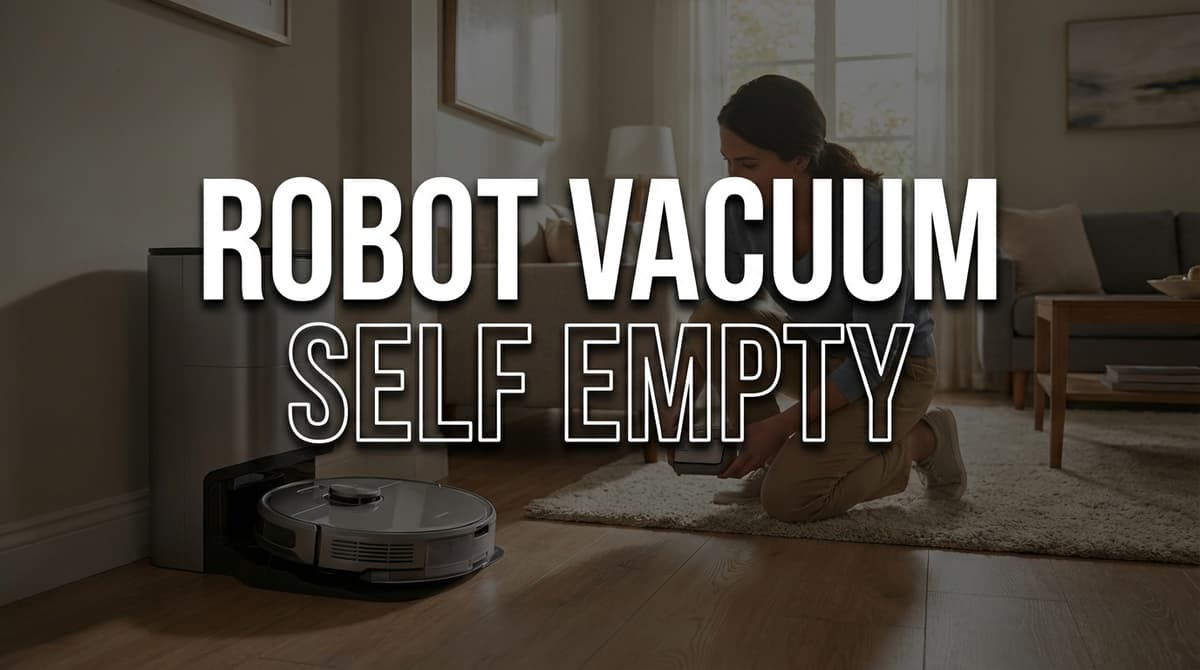
If this sounds familiar, you've probably wondered about those fancy robot vacuums with self-emptying stations. The marketing makes it sound like magic - just set it and forget it for weeks or even months. But like most "revolutionary" features, the reality is more nuanced than the sales pitch.
Self-emptying technology can genuinely transform your cleaning routine, but it comes with trade-offs that manufacturers don't always highlight. We'll dig into how these systems actually work, explore the real benefits and frustrations users experience, and help you figure out whether spending the extra money makes sense for your situation.
The magic behind self-emptying robot vacuums isn't actually that magical - it's essentially a powerful shop vac built into the charging dock. But the engineering that makes it seamless is pretty impressive once you understand what's happening behind the scenes.
When your robot vacuum completes its cleaning cycle and returns to dock, several things happen in quick succession. First, the robot aligns itself with the charging contacts and the debris transfer port. This alignment is crucial - even a slight misalignment can prevent the emptying process from working properly.
Once docked, the base station's powerful motor kicks in. We're talking about suction power that's typically 10-15 times stronger than the robot's own vacuum motor. This creates a pressure differential that sucks the contents of the robot's dustbin through a transfer tube and into the base station's collection bag or bin.
The whole process usually takes 10-15 seconds, though it can vary depending on how full the robot's bin is and what type of debris it's collected. Fine dust transfers almost instantly, but things like pet hair or larger debris might take the full cycle.
What's particularly clever is the sealing mechanism. Most systems use a rubber gasket that creates an airtight seal between the robot and the base station. Without this seal, you'd lose suction efficiency and end up with debris scattered around the dock area - not exactly the hands-off experience you're paying for.
Here's where manufacturers have taken two very different approaches, each with distinct advantages and frustrations.
Bagged systems, like those used by Dreame and Roborock self-empty units, use disposable bags that typically hold 30-60 days worth of debris for an average household. The bags are usually multi-layer with built-in filtration, which means less dust escapes when you finally do need to change them. The downside? Those bags can cost $4-6 each, which adds up in ongoing expenses.
Bagless systems, found through brands like Ecovacs and Shark, dump debris into a washable bin similar to a traditional upright vacuum. No ongoing bag costs, but you're back to dealing with dust clouds when you empty the base station every month or so. Some users find this defeats part of the purpose of having a self-emptying system in the first place.
There's also a practical difference in capacity. Bagged systems can often go longer between maintenance because the bags compress debris more efficiently than a rigid bin. A bagless system might need attention every 2-4 weeks, while a bagged system could potentially run for 2-3 months in a low-debris household.
Robot vacuums don't just empty themselves randomly - they use sensors and algorithms to determine when it's necessary. Most models have a simple infrared sensor in the dustbin that detects when debris reaches a certain level. Hit that threshold, and the robot will initiate self-emptying the next time it docks.
But it's not just about bin fullness. Many models also empty after every cleaning cycle as a preventive measure, especially if they've been running for a while. This helps maintain consistent suction power for the next cleaning session.
Some higher-end models get smarter about timing. They'll learn your household's debris patterns and adjust accordingly. If you have a golden retriever that sheds heavily, the robot might empty after shorter cleaning cycles during shedding season. Conversely, in a minimal-debris household, it might skip emptying cycles to reduce unnecessary noise and bag usage.
Manual override is almost always available through the app, which is handy when you want to empty before having guests over or when you're about to do a deep cleaning session.
Let's cut through the marketing fluff and talk about what self-emptying technology actually delivers in real-world use.
The most obvious benefit is also the most genuine - you can legitimately forget about your robot vacuum for extended periods. In a typical 1,500 square foot home with light to moderate debris, a self-emptying robot can run for 4-8 weeks without any intervention from you.
Compare that to traditional robot vacuums, which need emptying every 2-3 cleaning cycles in the same environment. If you're running daily cleanings, that's the difference between emptying every couple of days versus emptying once a month. For busy households, this time saving is substantial.
The psychological benefit is equally important. There's something genuinely liberating about knowing your floors are being cleaned without adding another recurring task to your mental checklist. You can schedule cleaning while you're at work or traveling without worrying about a full bin cutting the session short.
I've talked to users who've had their self-emptying robots for over a year and genuinely forget they exist most of the time - until they notice their floors are consistently cleaner than they used to be. That's the kind of seamless automation that justifies the premium for many people.
If you have pets that shed, self-emptying becomes less of a luxury and more of a practical necessity. Pet hair has this annoying tendency to compress and clog robot vacuum bins, which reduces suction and can even jam the collection mechanism.
With traditional robots, a full bin of pet hair can reduce cleaning effectiveness by 30-50% in subsequent rooms. The robot keeps running, but it's basically just stirring up debris rather than collecting it. Self-emptying prevents this performance degradation by ensuring the bin starts empty for every cleaning cycle.
There's also the tangle factor to consider. Pet hair loves to wrap around brush rolls and get stuck in bin corners. When the robot self-empties frequently, there's less opportunity for hair to accumulate and create those stubborn clogs that require manual intervention.
Here's a benefit that doesn't get enough attention: self-emptying systems often provide better allergen control than manual emptying. When you empty a traditional robot vacuum, you're inevitably exposed to dust and allergens as they puff out of the bin.
Self-emptying systems contain this debris transfer in a closed system. The base station's powerful suction and sealed bags or bins mean less allergen exposure during maintenance. Some base stations also include HEPA filtration, which captures particles that might otherwise escape back into your home's air.
For family members with dust allergies or respiratory sensitivities, this containment can make the difference between using a robot vacuum comfortably or dealing with symptoms every few days when it needs emptying.
Now for the reality check - self-emptying technology isn't perfect, and there are some legitimate frustrations that manufacturers tend to gloss over in their marketing.
Let's address the elephant in the room: self-emptying robots are loud. Not just a little louder - they're "wake up the baby" loud during the 10-15 second emptying cycle. We're talking about 70-80 decibels, which is comparable to a garbage disposal or a noisy blender.
This creates some awkward timing situations. If your robot finishes cleaning at 6 AM and immediately starts its emptying cycle, everyone in nearby bedrooms is getting an unwelcome wake-up call. Some models allow you to disable automatic emptying during certain hours, but then you're back to manual intervention.
Some users get creative with scheduling - running cleanings to finish before quiet hours or after everyone's awake. But this requires more planning than the "set and forget" promise suggests. Apartment dwellers also need to be considerate of neighbors, particularly if the base station is against a shared wall.
The noise isn't just about timing, either. The emptying sound is distinctively jarring compared to the gentle humming of the robot itself. It's the kind of noise that stops conversations.
Here's where the math gets interesting, and not necessarily in a good way. Beyond the initial premium for the self-emptying feature itself, you're signing up for ongoing expenses over time.
Replacement bags for bagged systems typically cost $4-6 each and last 4-8 weeks depending on your household's debris level. That's $50-120 per year just for bags. Over a typical 5-year robot vacuum lifespan, you're looking at $250-600 in bag costs alone.
Bagless systems avoid the bag costs but often require more frequent maintenance of the base station bin and internal components. You're trading ongoing bag expenses for more hands-on maintenance time.
Self-emptying base stations are significantly larger than standard charging docks - typically 12-15 inches wide and 8-10 inches deep. That might not sound like much, but it can be challenging to find an appropriate location in smaller homes or apartments.
The base station needs clearance on both sides for the robot to dock properly, plus access to an electrical outlet. Unlike simple charging docks that can tuck into corner spaces, self-emptying stations often need more prominent placement that might not fit your aesthetic preferences.
There are also some subtle placement requirements that aren't always obvious. The station needs to be on a hard, level surface for proper sealing during the emptying process. Thick carpet can interfere with docking alignment. Some models are sensitive to nearby furniture or walls that might interfere with the robot's approach angle.
The decision ultimately comes down to how much you value convenience versus the cost premium. But there are some specific household factors that make self-emptying technology more or less worthwhile.
Before committing to self-emptying technology, consider whether other approaches might meet your needs at lower cost.
Self-emptying robot vacuums deliver on their core promise - they genuinely reduce the hands-on maintenance required to keep your floors consistently clean. For the right household, the convenience can be transformative, especially if you have pets, allergies, or a busy schedule that makes regular maintenance challenging. But let's be honest - this is a premium convenience feature, not a cleaning necessity.
The sweet spot for self-emptying technology seems to be larger homes with pets, busy professionals, or households where dust allergies make manual emptying problematic. For smaller homes, budget-conscious users, or people who don't mind brief maintenance tasks, the cost premium can be harder to justify.
If you're on the fence, consider starting with a traditional robot vacuum to see how you adapt to robotic cleaning. You can always upgrade to self-emptying technology later if the maintenance burden becomes annoying. But if you know you want the most hands-off cleaning experience possible and the budget allows for it, self-emptying systems do deliver genuine lifestyle improvements that many users find worth the investment.
